The Kiental Is the Griesalp Road, the Tschingelsee and the End of the Line
The Kiental is a forested side valley leading to Griesalp on Europe's steepest PostBus route. The road is the experience, and the logistics are unforgiving.
- Flag
-

- ISO code
- CH
- Population
- 400
- Currency
- CHF
- Timezone
- Europe/Zurich
The Kiental is the Griesalp Road, the Tschingelsee and the End of the Line
The PostBus stops running in mid-autumn and the road closes until late spring, so the question is not whether you want to drive the steepest PostBus route in Europe but whether you will be here when it runs. The answer determines everything about your visit. The Griesalp road climbs at a 28 percent gradient, the steepest such route in Europe, and it is served by small special vehicles with a narrow, short wheelbase because nothing else can manage the hairpins. If you arrive between late October and mid-May, the bus does not run and the road above Kiental is closed to private vehicles. You walk or you skip the upper valley entirely.
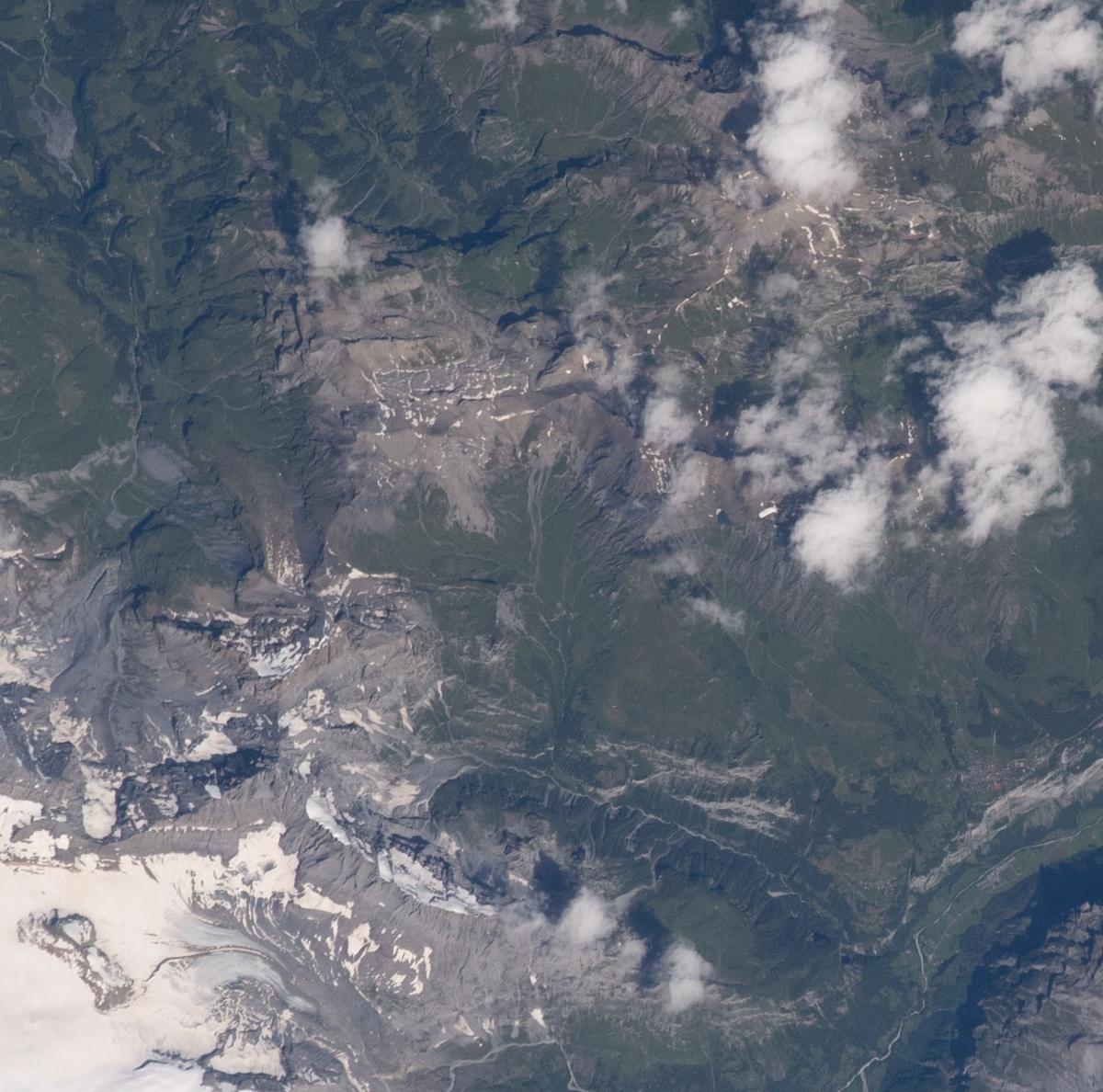
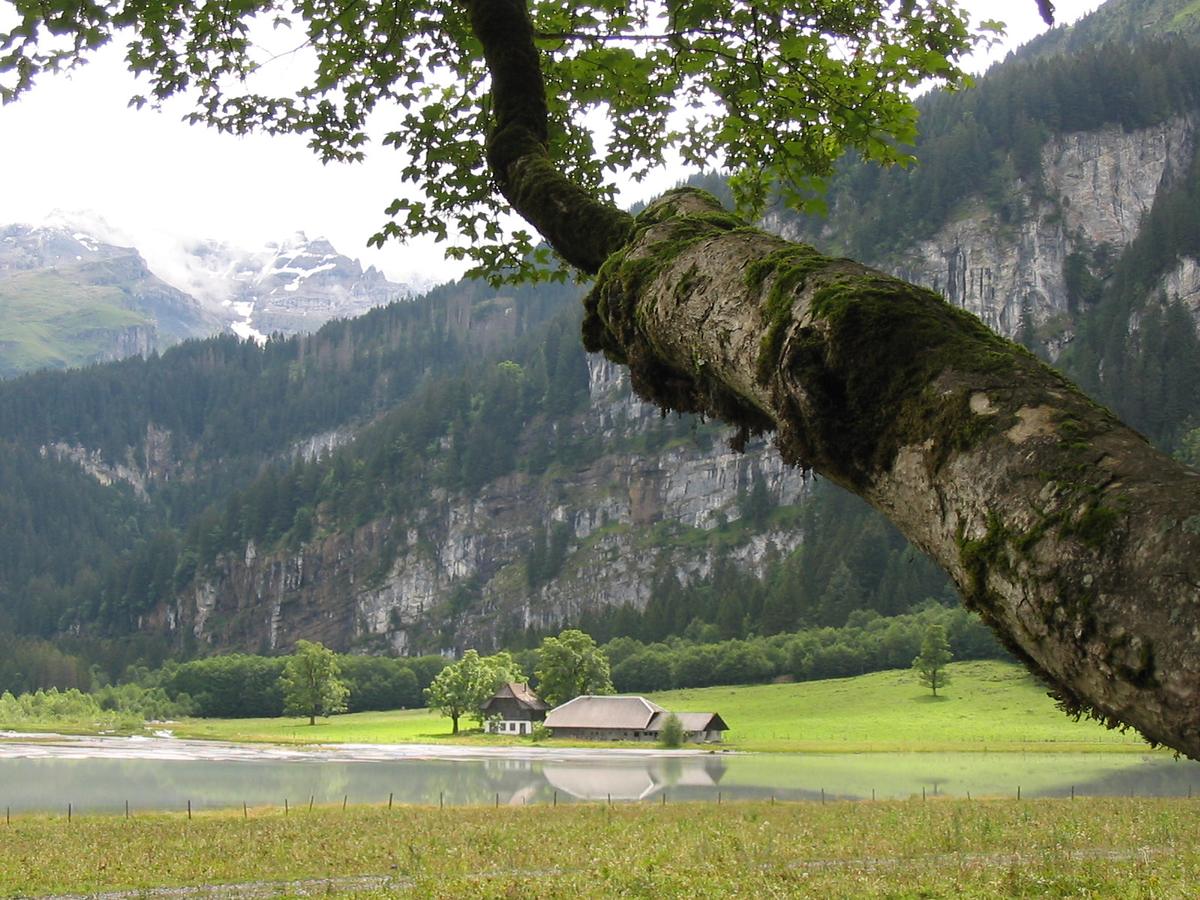
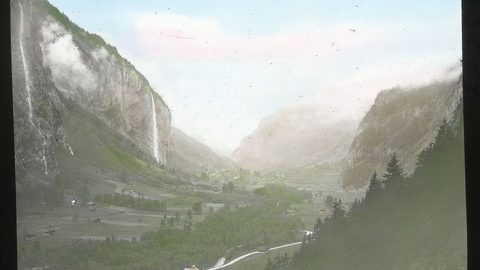
The Kiental is a deeply forested side valley of farms, population about 400, with a single road that dead-ends at Griesalp. The road begins at Reichenbach im Kandertal on the valley floor and climbs through the Kiental past whitewashed farmhouses, timber barns and the Tschingelsee, a debris-dammed lake that changes shape every year as water flow and sediment shift it. The scale is intimate. The terrain is not. Visitors routinely underestimate how long any walk takes because every side valley is steep and the bus schedules are sparse.
Griesalp is the end of the road, a hamlet that exists for hikers and for the hotel that has no card terminal because there is no mobile signal and no taxi backup. The last bus out can leave as early as 16:30 even in July. Miss it and you are committed for the night. Bring cash. Swiss francs. Notes. The hotel accepts nothing else above 1,500 metres.
_(cropped).jpg)
The Road and the Bus: What Actually Runs and When
The PostBus route from Kiental to Griesalp operates approximately May through October, depending on snow conditions. The exact start and end dates change every year. Check the PostAuto website in the week before your trip for the current season's timetable. Seat reservation on the bus is mandatory in high season. You reserve through the SBB Mobile app or the PostAuto site. You pay with coins or the app. Drivers do not sell tickets on board. This is not a courtesy, it is a rule, and the driver will not let you board without proof of payment.
Private cars can drive the Kiental road year-round as far as the village of Kiental itself. The section from Kiental to Griesalp is subject to seasonal closure. Even when it is open, it is not recommended. The gradient is punishing, the road is narrow, there are no passing places for metres at a stretch, and the PostBus driver has right of way and will not reverse. If you meet it on a hairpin, you reverse.
What It Costs and How to Book
A full fare from Bern to Kandersteg by train runs roughly CHF 35 to CHF 40 and takes roughly 65 minutes on the BLS Lötschberg line. From Spiez, the journey is about 25 minutes. From Zurich, budget CHF 75 to CHF 80 and 2 hours 15 minutes via Bern or Spiez. No airport bus serves the valley. Fly into Bern or Zurich and take the train.
The PostBus fare from Kiental to Griesalp is a standard zone ticket. Buy it at the machine in Kandersteg or through the SBB app before you board. Do not assume you can buy it from the driver or at a shop in Kiental. You cannot.
What to Do When You Get There: Three Objectives, One Per Day
The Kiental is a single dead-end valley with no shortcuts to anywhere else. Each side branch consumes a full day because you must return to the valley floor to reach the next one. Accept this before you arrive. A three-day minimum is not a recommendation, it is the practical minimum to see anything above treeline. Weather closes in fast. You need a buffer day to hit at least one high-altitude objective.
Griesalp and the High Trails
From Griesalp you have two major exits on foot. The first is the Via Alpina crossing to Mürren or Lauterbrunnen via the Sefinenfurgge at 2,612 metres. The second is the Blüemlisalp hut at 2,840 metres, operated by the Swiss Alpine Club, reached by a hiking trail that takes roughly four to five hours from Griesalp. Both routes require full alpine gear, offline maps downloaded before you leave Spiez (there is no signal at Griesalp), and an early start. The last bus from Griesalp leaves at 16:30. If you are not back at the bus stop by then, you sleep at the hut or at the hotel.
Tschingelsee and the Lower Valley
The Tschingelsee sits on the valley floor about halfway between Kiental village and Griesalp. It is a short walk from the road, manageable for families with young children who want a lake walk without a mountain climb. The lake is dammed by landslide debris, not by rock, so its shape changes annually. What you get one year is not what you get the next. The water is cold, the setting is forested, and there are no facilities. Bring your own food and drink.
Kiental Village and the Road Walk
If the bus is not running or you want to walk, the road from Kiental to Griesalp is a legitimate hiking route on tarmac. Allow two hours one way. The gradient is constant. The views open up as you climb. The traffic is nearly zero. It is quiet, which is the whole point of the valley. There is no through traffic because the road goes nowhere else. Limited accommodation capacity in the valley keeps the numbers low even in August.

Who Should Come and Who Should Not
The Kiental and Griesalp suit hikers who want high alpine trails without the crowds of the Jungfrau region. They suit families with young children who need manageable lake walks and a cable car at the valley mouth. They suit serious ski tourers in late February and early March when the spring snow is stable. They suit travellers who want silence rather than a scene, who are happy to sleep in a mountain hut above treeline and pay in cash because there is no terminal.
The valley does not suit nightlife seekers, luxury shoppers, anyone who wants a car free village centre with cobbled lanes, or visitors who expect a large interconnected ski circus with dozens of lifts. The Kiental is a collection of small, separated pockets, not one continuous resort. The drama is in the rock walls and waterfalls, not in apres ski or shopping. If you want the latter, go to Grindelwald or Lauterbrunnen. If you want to be alone in a glacial valley where the only sound is the river and the only schedule is the one bus, come here.
What to See in Kiental
Common Questions
Can I drive my car from Kiental to Griesalp?
The road is open year round to Kiental village. The section from Kiental to Griesalp is subject to seasonal closure. Even when open, driving it is not recommended. The gradient is 28 percent, the road is narrow with no passing places, and the PostBus has right of way.
What happens if I miss the last bus from Griesalp?
You stay overnight. There is no taxi backup, no mobile signal, and no alternative transport. The hotel at Griesalp accepts cash only. The last bus leaves as early as 16:30 even in summer. Plan your return carefully.
Is there phone reception in the Kiental and at Griesalp?
Swisscom has 4G in Kandersteg village and at Oeschinensee. The Kiental valley floor has patchy coverage. Griesalp has zero signal. Download offline maps and the SBB timetable before leaving Spiez.
When is the best time to visit the Kiental and Griesalp?
July and August, when all cable cars and mountain huts are open and high trails are snow free. Late February to early March works for ski touring on spring snow. Avoid mid April to mid June and late October to mid December when nothing operates.
Read next
-
 Griesalp
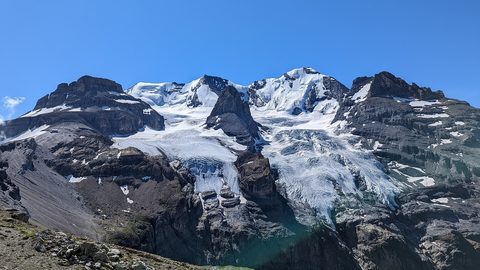
 sits at the end of the Kiental on Europe’s steepest PostBus route, a 28% gradient road. The hotel takes only cash, and the last bus leaves early.
Griesalp
Griesalp sits at the end of the Kiental on Europe’s steepest PostBus route, a 28% gradient road. The hotel takes only cash, and the last bus leaves early.
-
 Kandertal Hotels and Mountain Inns Worth Booking
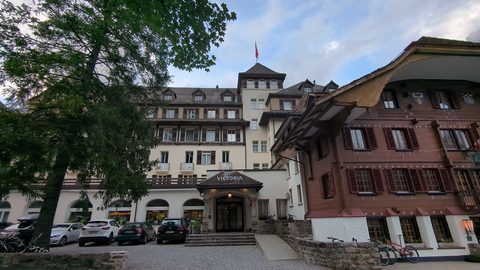
From the timber rooms of the Waldhaus in the Gasterntal to a dormitory bed at the Oeschinensee mountain hut, here are the Kandertal's real hotel options.
Kandertal Hotels and Mountain Inns Worth Booking
From the timber rooms of the Waldhaus in the Gasterntal to a dormitory bed at the Oeschinensee mountain hut, here are the Kandertal's real hotel options.
-
 Where to Stay in the Kandertal Valley for Hiking and Quiet
Compare the three places to sleep in the Kandertal—Kandersteg village, the Kiental farms, and the high hamlet of Griesalp—and find the right base for your hiking trip.
Where to Stay in the Kandertal Valley for Hiking and Quiet
Compare the three places to sleep in the Kandertal—Kandersteg village, the Kiental farms, and the high hamlet of Griesalp—and find the right base for your hiking trip.
-
 Things to Do in the Kandertal Summer Hiking and Winter Ski Touring
What there is to do in the Kandertal, split between summer hiking and winter ski touring, with the dead shoulder seasons clearly marked so you do not arrive to closed lifts.
Things to Do in the Kandertal Summer Hiking and Winter Ski Touring
What there is to do in the Kandertal, split between summer hiking and winter ski touring, with the dead shoulder seasons clearly marked so you do not arrive to closed lifts.
-
 Best Time to Visit the Kandertal and When to Stay Away
The Kandertal has two real seasons—high summer hiking and late-winter ski touring—and two long shoulder closures when the cable cars and huts simply shut.
Best Time to Visit the Kandertal and When to Stay Away
The Kandertal has two real seasons—high summer hiking and late-winter ski touring—and two long shoulder closures when the cable cars and huts simply shut.
-
 Getting Around the Kandertal Without a Car
The Kandertal runs on PostBuses with early last departures and no taxi backup. Learn the Gasterntal road rules, the SBB app, and why offline maps matter.
Getting Around the Kandertal Without a Car
The Kandertal runs on PostBuses with early last departures and no taxi backup. Learn the Gasterntal road rules, the SBB app, and why offline maps matter.
-
 Kandertal Itineraries for Two Days Four Days or a Week
Plan your Kandertal days around the reality that each side valley takes a full day and you cannot shortcut between them—here are itineraries for two, four and seven days.
Kandertal Itineraries for Two Days Four Days or a Week
Plan your Kandertal days around the reality that each side valley takes a full day and you cannot shortcut between them—here are itineraries for two, four and seven days.
-
 Switzerland Travel Basics for the Bernese Oberland Trip
Switzerland works differently from what many first-time visitors expect. Here are the transport, trail and accommodation basics you will need for the Bernese Oberland.
Switzerland Travel Basics for the Bernese Oberland Trip
Switzerland works differently from what many first-time visitors expect. Here are the transport, trail and accommodation basics you will need for the Bernese Oberland.
-
 Kandertal With Children What Actually Works and What Does Not
Blausee and Allmenalp work beautifully for families with young children in the Kandertal. Oeschinensee needs an early start, and Gasterntal and the Gemmi are better left for older legs.
Kandertal With Children What Actually Works and What Does Not
Blausee and Allmenalp work beautifully for families with young children in the Kandertal. Oeschinensee needs an early start, and Gasterntal and the Gemmi are better left for older legs.