Choosing Your Base in the Kandertal
Compare the three places to sleep in the Kandertal—Kandersteg village, the Kiental farms, and the high hamlet of Griesalp—and find the right base for your hiking trip.
Choosing Your Base in the Kandertal
You have three real choices for where to sleep in the Kandertal, and picking the wrong one will cost you an hour of bus riding each day or force you to skip a trail entirely. The valley is a dead end system. Its side valleys Kiental and Gasterntal branch off the main floor and go nowhere, and the bus that serves them runs on a schedule that punishes late starts. Kandersteg village, the Kiental valley, and the road-end hamlet of Griesalp are your realistic overnight bases. Each suits a different traveller, and the differences are not subtle.
Reichenbach im Kandertal and Kandergrund are not bases. They are transit points where the train stops and the road widens. Reichenbach has 3,500 residents and a handful of hotels with half board in the CHF 120 to 200 band, but it sits on the valley floor 20 minutes by train from Spiez with no direct access to any trailhead worth waking up for. Kandergrund is a string of hamlets along the road, population 800. You can sleep there cheaply, but you will spend every morning commuting into the upper valley and every afternoon watching the clock for the last bus. Skip both unless you are passing through.
Half board is not optional at most mountain inns and the majority of village hotels in the Kandertal. It is the standard package, included in the listed room rate at 80 to 90 percent of properties. You get dinner and breakfast, period. If you find a hotel that lists half board separately, the supplement sits in the CHF 25 to 45 band per person per night. For a traveller who has never encountered it: half board means the evening meal is fixed, served at a set time usually 18:00 or 18:30, and you eat what the kitchen cooks that night. There is no menu choice and no skipping the main course and ordering a salad. The food is honest Swiss mountain cooking, heavy on cheese, potato, and cured meat. If you want flexibility, book a holiday flat where you cook for yourself.
.jpg)
Kandersteg Village: the Year Round Base for Everyone Except Purists
The Practical Hub
Kandersteg village is where you stay if you have any doubt about weather, any concern about bus schedules, or any plan involving multiple side valleys. It holds roughly 60 percent of the upper valley's 2,500 guest beds. It has a railway station with direct trains to Bern in 65 minutes and Spiez in 30 minutes. Two supermarkets operate year round. The postbus network radiates from here, and the cable cars to Oeschinensee, Sunnbüel, and Allmenalp all start within 1.2 kilometres of the station. In shoulder season, when most mountain huts and the Griesalp hotel close, this village is the only place in the upper valley with a handful of hotels that remain open. If you arrive in late April, early May, or November, you stay here or you leave the valley.
Cost And What You Get
The downside is the cost. A double room with half board in peak season sits in the CHF 180 to 350 band per person per night, the highest rate in the valley. Gemeinde Kandersteg publishes the figure annually. Check their site for this year's number. You pay for convenience and for the guest card, which at Kandersteg covers free local bus rides and reduced fares on the Oeschinensee gondola, the Sunnbüel cable car, and the Allmenalp cable car, plus free entry to the public indoor pool. The card alone can save a family the equivalent of CHF 40 to 60 a day in lift tickets. If you are travelling on a budget, you pay a premium to stay here and you should accept that.
Who Should Skip It
Kandersteg village does not suit everyone. It is quiet, not sleepy. The main street has no nightlife and no luxury shopping. You come here to walk, not to spend. The terrain is serious. Visitors consistently underestimate how long trails take because the side valleys are steep and the altitude hits harder than expected. Budget three full days minimum. The weather closes in fast, and you need a buffer to hit at least one high altitude objective like Oeschinensee or the Gemmi crossing. Two days is not enough to see the lake, Blausee, Gasterntal, and the Gemmi. The valley is linear but each side branch is a dead end that consumes a full day. You cannot shortcut between them without returning to the valley floor.
Kiental Valley and Griesalp: Deep Immersion with Hard Tradeoffs
Why Stay Up Here
The Kiental is a deeply forested side valley that runs south from Reichenbach. It leads to Griesalp, an end of road hamlet at the foot of the high alpine trail network. Griesalp has two inns, Berghaus Griesalp and Hotel Waldrand, totalling about 80 beds. The Kiental itself has scattered farm stays and a handful of small hotels. Prices here are the lowest in the valley, in the CHF 100 to 180 band per person per night with half board. You stay here for one reason: you want to wake up at the trailhead, not commute to it.
This hamlet is the starting point for the Blüemlisalphütte, the Gspaltenhornhütte, and the Kanderfirn glacier viewpoint. If you are a serious ski tourer in late February to early March, or a hiker aiming for high alpine huts above the treeline, staying here saves you the 45 minute bus ride from Kandersteg each way. That adds an hour and a half of usable daylight to your day. The tradeoff is brutal. The access road is the steepest postbus route in Europe with a 28 percent gradient, and the last bus back from the hamlet can leave as early as 16:30 even in summer. There is no taxi backup. If you miss it, you walk down or you sleep on the mountain. The road is also impassable when the bus is not running. Private cars can drive it, but the access is controlled and the schedule is sparse. Connectivity is zero. Swisscom has no signal at Griesalp. No card terminals work above 1,500 metres. You carry cash or you do not eat.
Seasonal Shutdown
Both Griesalp and the Kiental shut down hard in shoulder season. The mountain inns close from November through May. The Alpine Club huts are closed from October through June, with variations by hut. If you arrive in the avoidance window from mid April to mid June, or late October to mid December, you cannot stay here. Most cable cars are also closed, high trails are snow covered or dangerously soft, and the valley sits in deep shade. You go to Kandersteg or you go home.
| Factor | Kandersteg Village | Kiental Valley | Griesalp |
|---|---|---|---|
| Best for | Families, first timers, shoulder season visitors, multi valley itineraries | Ski tourers, hikers who want the Kiental trails, budget travellers | High alpine hut hikers, climbers, serious ski tourers |
| Peak season double room with half board | CHF 180 to 350 band per person per night | CHF 100 to 180 band per person per night | CHF 100 to 180 band per person per night |
| Year round availability | Yes, a few hotels open all year | No, most properties close November to May | No, inns close November to May |
| Guest card | Free bus, reduced lifts, free pool | Free bus, reduced Blausee entry | Free bus only |
| Last bus from trailheads | 18:00 to 19:00 summer | 18:00 to 19:00 summer | As early as 16:30 summer |
| Mobile signal | 4G in village and at Oeschinensee | Patchy, zero at Griesalp | Zero |
| Cash requirement | Cards accepted in village | Cash at most alp huts | Cash only |

The Mountain Hut Option: Sleeping Above the Treeline
The Huts
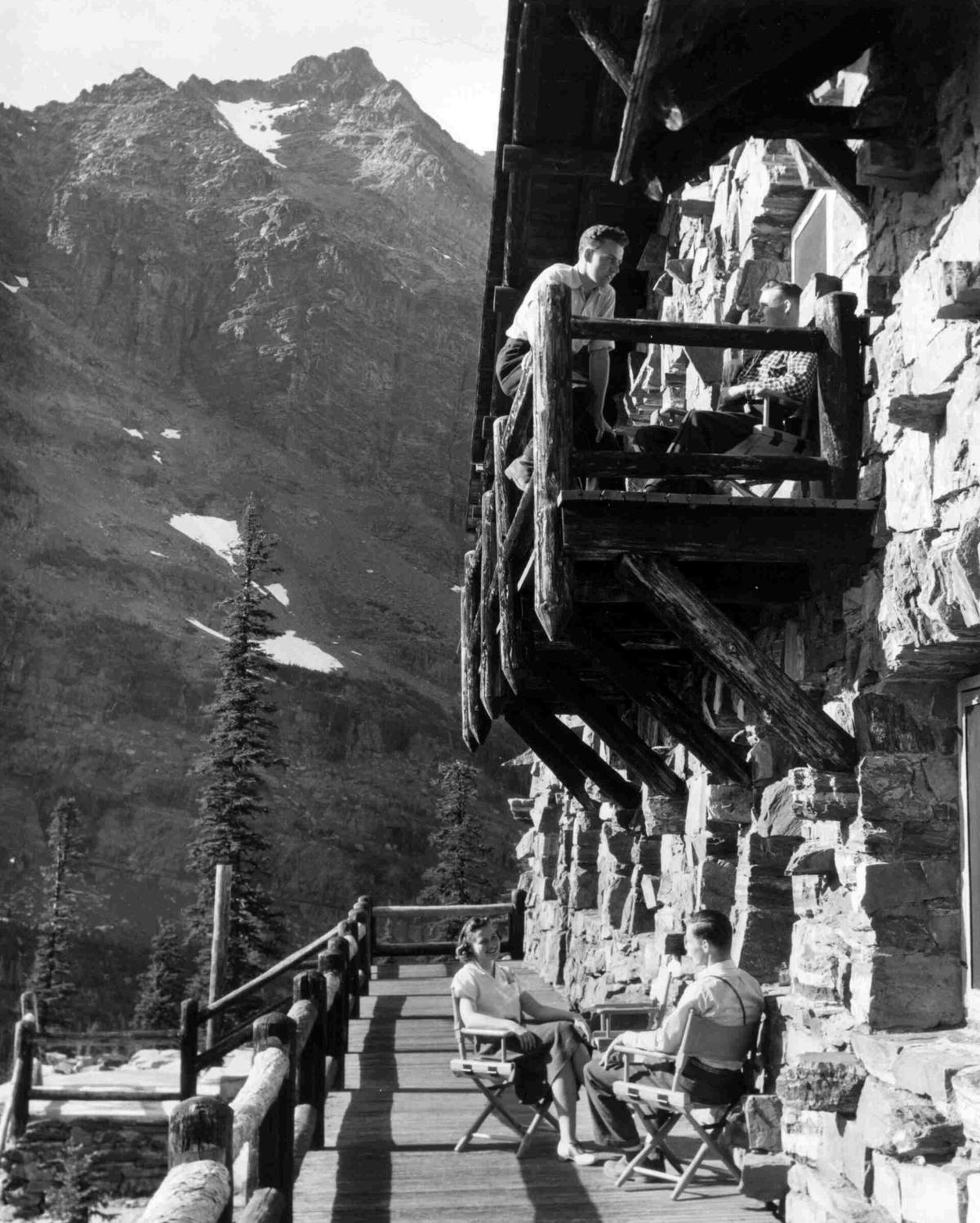
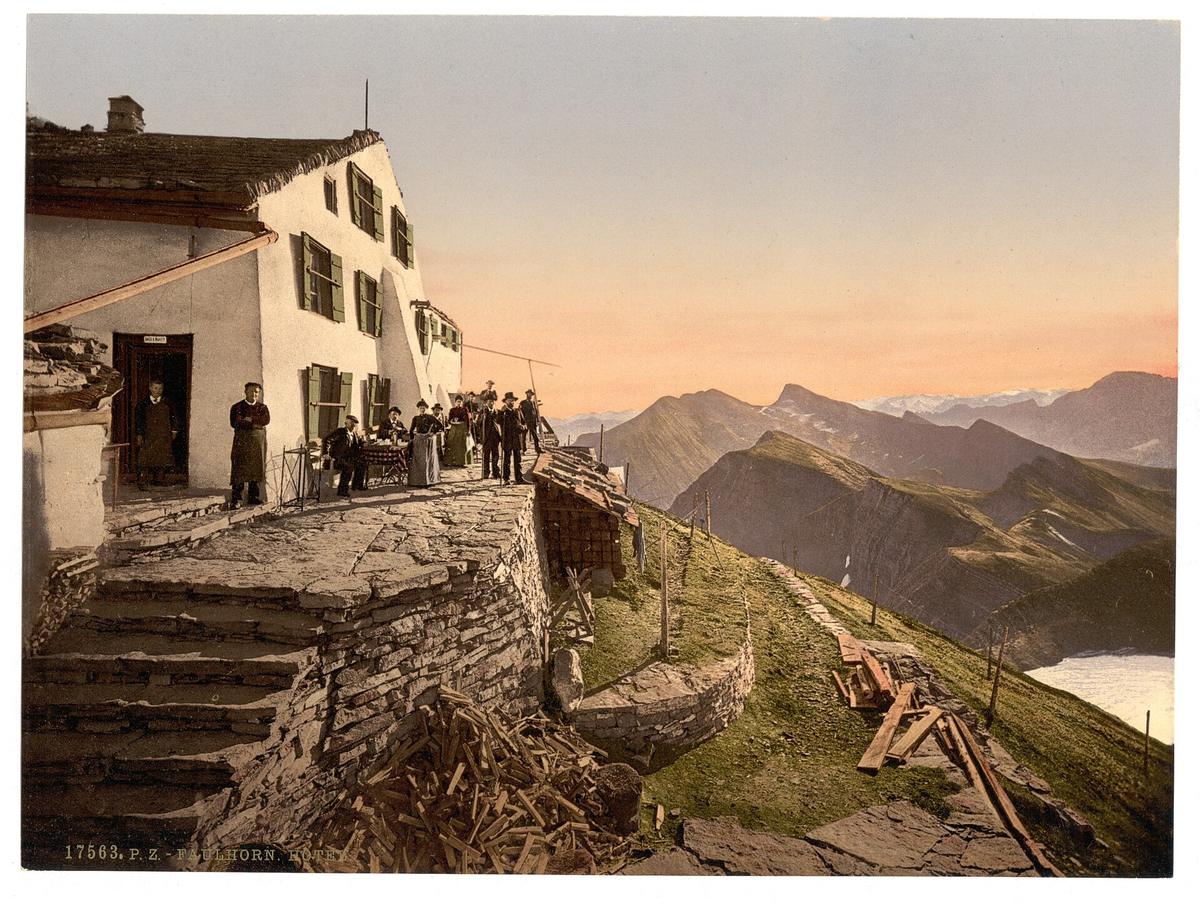
Four Alpine Club huts operate in the upper Kandertal: the Blüemlisalphütte, the Fründenhütte, the Balmhornhütte, and the Gspaltenhornhütte. Overnight rates for SAC members in dormitory accommodation sit in the CHF 30 to 50 band per person. Non members pay in the CHF 50 to 70 band. The mountain inn at the lake, Berghotel Oeschinensee, has about 50 beds and operates as a more comfortable alternative at the basin. These huts are the reason the Kandertal exists as a destination for serious alpine hikers. They sit above the treeline, accessible only on foot, and they put you on the trail at sunrise when the light is right and the crowds are absent.
Timing And Access
The main limitation is the season. Most Alpine Club huts close from October through June. The Berghotel Oeschinensee closes from November through May. If you want to sleep at the lake in July or August, you book ahead. The cable car queue at Oeschinensee in peak summer can exceed 90 minutes from 10:00. Arrive before 09:00 or after 14:00 to avoid it. If you arrive after the last gondola, you walk up from Kandersteg village. The trail is 800 metres from the station to the gondola base, then a steep 90 minute climb to the water. Do that once for the experience, but do not plan it as your daily routine.
Is A Hut For You
Hut stays are not for everyone. Dormitory bedding, no privacy, a fixed dinner at 18:00, and a 07:00 lights out expectation for the early risers. You also carry your own sleeping bag liner, earplugs, and cash. If that sounds tolerable, the huts give you access to trails that day hikers from the valley never reach. If it does not, book a hotel in Kandersteg and take the early gondola.
Common Questions
What is half board at a Swiss mountain inn?
Half board means the listed room rate includes dinner and breakfast. Dinner is fixed, served at a set time usually 18:00 or 18:30, and you eat what the kitchen cooks. There is no menu choice. If the hotel lists half board separately from the room rate, the supplement sits in the CHF 25 to 45 band per person per night. At most mountain inns and 80 to 90 percent of village hotels in the Kandertal, half board is included in the published rate, not optional.
Can I stay in Griesalp or at a mountain hut in shoulder season?
No. Griesalp's inns close from November through May. The Alpine Club huts close from October through June, with individual variations. The Berghotel Oeschinensee closes from November through May. If you travel between mid April and mid June, or late October to mid December, most cable cars and huts are closed, high trails are snow covered, and the valley sits in deep shade. Kandersteg village has a few hotels that remain open year round. That is your only option.
How do I get around the Kandertal without a car?
PostBus is the only public transport. Drivers do not sell tickets on board. You need coins or the SBB Mobile app before you board. The single biggest mistake visitors make is assuming the last bus runs late. In summer, the last connection from Griesalp or Gasterntal can leave as early as 16:30. In winter it is earlier. There is no taxi backup. Download offline maps and the SBB timetable before leaving Spiez, because Gasterntal and Griesalp have zero mobile signal.
Is Reichenbach or Kandergrund a good base for hiking?
No. Reichenbach im Kandertal has 3,500 residents and sits 20 minutes by train from Spiez on the valley floor. Kandergrund is a string of hamlets with 800 residents. Neither has direct access to any trailhead worth a full day. You will commute into the upper valley every morning and watch the clock for the last bus every afternoon. Sleep there if you are passing through, not if you are hiking.
How much does a hotel in Kandersteg cost in peak season?
A double room with half board in July, August, or late February to early March sits in the CHF 180 to 350 band per person per night. Gemeinde Kandersteg publishes the rate annually. Check their site for this year's figure. The Kandersteg guest card covers free local bus rides, reduced fares on the Oeschinensee gondola, Sunnbüel cable car, and Allmenalp cable car, and free entry to the public indoor pool. That can save a family the equivalent of CHF 40 to 60 per day.
How many days do I need in the Kandertal?
Three full days minimum. The weather closes in fast and you need a buffer to hit at least one high altitude objective like Oeschinensee or the Gemmi crossing. The valley is linear but each side branch is a dead end that consumes a full day. You cannot see the lake, Blausee, Gasterntal, and the Gemmi in two days. You will spend both days commuting and leave without seeing the high trails.
What is the Griesalp road and why should I care?
The Griesalp road is the steepest postbus route in Europe, with a 28 percent gradient. It serves the Kiental valley and the hamlet of Griesalp. The last bus from the hamlet can leave as early as 16:30 even in summer. There is no taxi. If you miss it, you walk down or sleep on the mountain. The road is also single lane with controlled access. Private cars need a day permit in peak months and are banned from 10:00 to 16:00.
Read next
-
 Kandertal Hotels and Mountain Inns Worth Booking
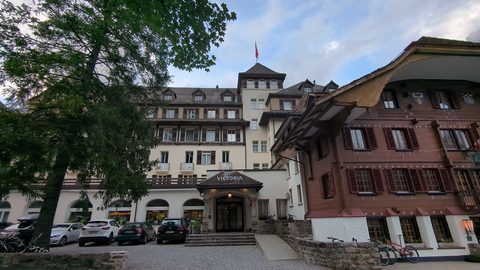
From the timber rooms of the Waldhaus in the Gasterntal to a dormitory bed at the Oeschinensee mountain hut, here are the Kandertal's real hotel options.
Kandertal Hotels and Mountain Inns Worth Booking
From the timber rooms of the Waldhaus in the Gasterntal to a dormitory bed at the Oeschinensee mountain hut, here are the Kandertal's real hotel options.
-
 Things to Do in the Kandertal Summer Hiking and Winter Ski Touring
What there is to do in the Kandertal, split between summer hiking and winter ski touring, with the dead shoulder seasons clearly marked so you do not arrive to closed lifts.
Things to Do in the Kandertal Summer Hiking and Winter Ski Touring
What there is to do in the Kandertal, split between summer hiking and winter ski touring, with the dead shoulder seasons clearly marked so you do not arrive to closed lifts.
-
 Best Time to Visit the Kandertal and When to Stay Away
The Kandertal has two real seasons—high summer hiking and late-winter ski touring—and two long shoulder closures when the cable cars and huts simply shut.
Best Time to Visit the Kandertal and When to Stay Away
The Kandertal has two real seasons—high summer hiking and late-winter ski touring—and two long shoulder closures when the cable cars and huts simply shut.
-
 Getting Around the Kandertal Without a Car
The Kandertal runs on PostBuses with early last departures and no taxi backup. Learn the Gasterntal road rules, the SBB app, and why offline maps matter.
Getting Around the Kandertal Without a Car
The Kandertal runs on PostBuses with early last departures and no taxi backup. Learn the Gasterntal road rules, the SBB app, and why offline maps matter.
-
 Kandertal Itineraries for Two Days Four Days or a Week
Plan your Kandertal days around the reality that each side valley takes a full day and you cannot shortcut between them—here are itineraries for two, four and seven days.
Kandertal Itineraries for Two Days Four Days or a Week
Plan your Kandertal days around the reality that each side valley takes a full day and you cannot shortcut between them—here are itineraries for two, four and seven days.
-
 Eating in the Kandertal From Mountain Huts to the Blausee Trout
From Älplermagronen at 1,678m to smoked trout from the Blausee farm, the Kandertal's food is tied to specific places and altitudes—here's where to eat.
Eating in the Kandertal From Mountain Huts to the Blausee Trout
From Älplermagronen at 1,678m to smoked trout from the Blausee farm, the Kandertal's food is tied to specific places and altitudes—here's where to eat.
-
 Kandersteg
 is the head of the Kandertal and the launch point for Oeschinensee, the Gemmi Pass and the Gasterntal. Here is what you reach from it.
Kandersteg
Kandersteg is the head of the Kandertal and the launch point for Oeschinensee, the Gemmi Pass and the Gasterntal. Here is what you reach from it.
-
 Reichenbach im Kandertal
 is the valley mouth where the road splits for Kandersteg or the Kiental. It is a junction, not a destination in itself.
Reichenbach im Kandertal
Reichenbach im Kandertal is the valley mouth where the road splits for Kandersteg or the Kiental. It is a junction, not a destination in itself.
-
 Kandergrund
 is a string of hamlets along the Kandertal road, anchored by the Blausee and overlooked by the Lötschberg railway ramp climbing to the tunnel.
Kandergrund
Kandergrund is a string of hamlets along the Kandertal road, anchored by the Blausee and overlooked by the Lötschberg railway ramp climbing to the tunnel.