Griesalp at the Head of the Kiental: The Road, the Hotel, and the Trails
Griesalp sits at the end of the Kiental on Europe’s steepest PostBus route, a 28% gradient road. The hotel takes only cash, and the last bus leaves early.
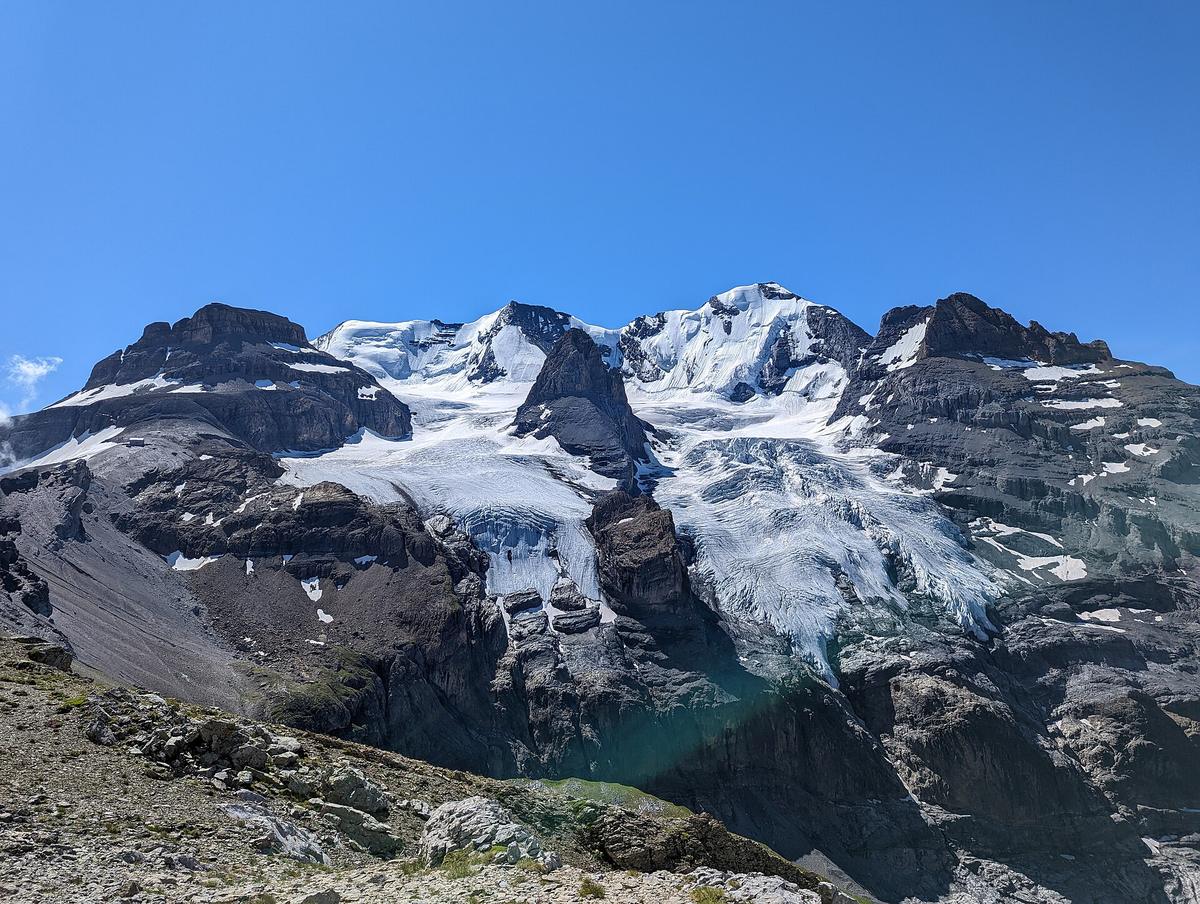

Griesalp at the Head of the Kiental: the Road, the Hotel, and the Trails
Most travellers assume the hardest part of reaching Griesalp is the hiking. It is not. The hardest part is getting there at all. Griesalp sits at roughly 1,400 metres at the end of the Kiental, a side valley so narrow and steep that the PostBus route serving it is the steepest in Europe. The gradient hits 28 percent. The buses are special narrow vehicles with reinforced brakes. And the driver will not sell you a ticket. You need coins in your pocket or the SBB Mobile app downloaded before you board.
This is not a valley you decide to visit on the morning of. The bus does not run in the mid-April to mid-June shoulder season. It does not run in the late autumn dead window either. The last departure back down can leave as early as late afternoon even in high summer. There is no taxi backup. If you miss it, you are sleeping at Griesalp or walking down the road in the dark. The road has no lighting. The valley has no phone signal. Swisscom 4G stops at Kandersteg village. Gasterntal and Griesalp have zero signal at all. Download offline maps and the SBB timetable before you leave Spiez.
The reward for getting the logistics right is a high-altitude trailhead that gives you access to the Via Alpina, the Sefinenfurgge pass and the Hohtürli pass, and a silence that the Jungfrau corridor cannot offer. But treat Griesalp as a base for multi-day hut routes, not a day trip from Kandersteg. The side valleys are dead ends. Each one consumes a full day. You cannot shortcut between them without returning to the valley floor.
- Altitude: Approx. 1,400 m
- Maximum Road Gradient: 28%
- Public Transport: PostBus only; tickets by coin or SBB Mobile app, not from driver
- Operating Months: Approximately late May to October, exact dates vary by snow conditions; closed mid-April to mid-June and late October to mid-December
- Seat Reservation: Mandatory in peak season (check PostAuto Schweiz AG for schedule)
- Last Bus Down: Late afternoon, as early as 16:30 in summer
- Phone Signal: None at Griesalp or Gasterntal
- Cash Policy: Mandatory at Griesalp hotel and all alpine huts above 1,500 m
The PostBus Route: Europe’s Steepest Scheduled Line
The Kiental to Griesalp PostBus route is operated by PostAuto Schweiz AG. The schedule, which changes every year based on snow conditions, runs from late May or early June through October. The shoulder windows mid-April to mid-June and late October to mid-December are closed. During those months most cable cars and huts are also shut, and high trails are either snow-covered or dangerously soft. Do not plan a trip in those windows unless you are a ski tourer on spring snow in late February or early March.
The bus uses narrow vehicles with reinforced brakes because a 28 percent gradient on a single lane road with hairpins needs hardware that does not fade. Seat reservation in season is mandatory. Book through the PostAuto website before you travel. On the bus itself, have either a SBB Mobile ticket or exact coins. Drivers do not handle cash. This is the single biggest trip up for visitors. Do not test it.
Leave your car in the Kiental valley at the parking area near the road start. Private cars are not banned on the Griesalp road, but the road is one lane and the parking at the top is limited to a few spaces for working alp vehicles. Driving up saves you nothing and risks a stressful reversing situation if you meet the bus.
The Tschingelsee Landslide Lake
The bus passes the Tschingelsee on the way up, a lake formed by a landslide that dammed the valley. You can walk there from the road in about 20 minutes. It is a short, flat detour. Do it on the ascent rather than the descent. The path is obvious. There is no hut, no restaurant, no ticket. Just the lake and the rock debris that created it. This is a pause, not a destination.
The Griesalp Hotel and Alpine Huts: Cash Only, No Exceptions
The Griesalp hotel is a working alp inn. It accepts cash only. No card terminals exist above 1,500 metres in this valley. The same applies to the Blüemlisalphütte at 2,840 metres, the Berghaus Oeschinensee at 1,678 metres, and every other hut you encounter on the passes. Withdraw cash in Kandersteg village before you board the bus. There are two supermarkets in Kandersteg with ATMs. Use one.
The hotel serves a wild berry tart with cream in summer, the berries foraged on the alp. It is worth the cash. But do not assume you can pay with a phone. There is no signal anyway. The point is not to test the system. It is to understand that this valley operates on an older economy. You bring cash, you eat. You do not bring cash, you do not eat.
The hotel is not a luxury lodge. It is a mountain inn with dormitory beds and private rooms, basic but clean. Book ahead in July and August. The same applies to the SAC Blüemlisalphütte. That hut sits at 2,840 metres and is run by the Swiss Alpine Club, Section Blümlisalp. It is the critical overnight stop if you are crossing the Hohtürli pass from Griesalp to Oeschinensee. Do not attempt that crossing in a single day unless you are a very fast, very experienced mountain walker. The ascent from Griesalp to the Hohtürli is approximately 1,380 metres. The route is rated T4, glacier free but exposed, and requires sure footedness, a head for heights, and proper equipment. The full traverse from Griesalp to Oeschinensee via the Hohtürli and Blüemlisalphütte takes 7 to 9 hours. Weather closes in fast at that altitude. Book the hut and give yourself a buffer.
The Two Passes: Sefinenfurgge and Hohtürli
Griesalp sits on the Via Alpina National Route 1. Stage 13 arrives from Engstlenalp. Stage 14 continues to Mürren. If you are walking the Via Alpina, Griesalp is your overnight stop between those two stages. If you are not doing the full route, the two passes that radiate from Griesalp are the reason to come here.
Sefinenfurgge: To the Lauterbrunnen Valley
The Sefinenfurgge pass sits at 2,612 metres west of Griesalp. The route is a mountain hiking trail rated T3 to T4. The ascent from Griesalp to the pass is about 1,200 metres. From the pass you descend into the Lauterbrunnen valley. The total walking time from Griesalp to Lauterbrunnen is 6 to 7 hours. This is a point to point crossing. You need someone to meet you at the far end, or a bus from Lauterbrunnen back to Kandersteg via Interlaken, which adds two hours of public transport. Do not treat it as a loop. It is not.
Hohtürli: To Oeschinensee and Blüemlisalphütte
The Hohtürli pass sits at 2,778 metres east of Griesalp. The ascent from Griesalp is about 1,380 metres. The route is alpine T4, glacier free but exposed. The pass drops to the Blüemlisalphütte at 2,840 metres, which is 4 to 5 hours from Griesalp. From the hut to Oeschinensee is another 3 to 4 hours. The full traverse ends at the Oeschinensee cable car station, which runs down to Kandersteg. This is the more practical crossing because it ends at a cable car. But the last cable car down from Oeschinensee in summer is late afternoon. Check the schedule before you start. If you miss it, you walk down the valley path, which takes another hour.
Both passes are for experienced mountain walkers only. The research is explicit: only for those with sure footedness, a head for heights, and appropriate equipment. Do not attempt either pass in soft snow conditions, afternoon thunderstorms, or low visibility. Griesalp is not a place to test your limits. It is a place to apply skills you already have.
Common Questions
Can I visit Griesalp as a day trip from Kandersteg?
Technically yes, if you catch the first bus up and the last bus down. Practically no, because the bus schedule is sparse and the last departure can be as early as 16:30. The valley is a dead end. You will spend more time waiting for buses than walking. Griesalp is better as a two day base with an overnight at the hotel or a mountain hut.
How do I pay for the PostBus if I do not have coins?
Use the SBB Mobile app to buy a ticket before boarding. The driver will not sell tickets. The app accepts credit cards. Download it and load the ticket while you still have phone signal in Kandersteg. After you enter the Kiental, signal drops.
Is the road safe for private cars?
It is a single lane road with a 28 percent gradient and blind hairpins. Parking at Griesalp is limited to working alp vehicles. Leave your car in the Kiental valley parking. Driving up creates a risk of meeting the bus on a narrow section with no passing space.
What should I do if the bus is not running?
The bus does not operate mid-April to mid-June and late October to mid-December. During those months there is no public access to Griesalp by road. Walking the road is possible but long and exposed to vehicle traffic. Choose a different destination in those windows.
Do I need to book the Griesalp hotel in advance?
Yes, especially in July and August when the valley is at peak occupancy. The hotel has limited beds. Book directly. The same applies to the Blüemlisalphütte if you plan the Hohtürli traverse. The SAC hut booking system opens in spring for the summer season.
Read next
-
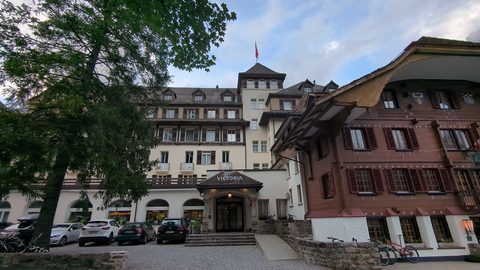
 Kandertal Hotels and Mountain Inns Worth Booking
From the timber rooms of the Waldhaus in the Gasterntal to a dormitory bed at the Oeschinensee mountain hut, here are the Kandertal's real hotel options.
Kandertal Hotels and Mountain Inns Worth Booking
From the timber rooms of the Waldhaus in the Gasterntal to a dormitory bed at the Oeschinensee mountain hut, here are the Kandertal's real hotel options.
-
 Where to Stay in the Kandertal Valley for Hiking and Quiet
Compare the three places to sleep in the Kandertal—Kandersteg village, the Kiental farms, and the high hamlet of Griesalp—and find the right base for your hiking trip.
Where to Stay in the Kandertal Valley for Hiking and Quiet
Compare the three places to sleep in the Kandertal—Kandersteg village, the Kiental farms, and the high hamlet of Griesalp—and find the right base for your hiking trip.
-
 Things to Do in the Kandertal Summer Hiking and Winter Ski Touring
What there is to do in the Kandertal, split between summer hiking and winter ski touring, with the dead shoulder seasons clearly marked so you do not arrive to closed lifts.
Things to Do in the Kandertal Summer Hiking and Winter Ski Touring
What there is to do in the Kandertal, split between summer hiking and winter ski touring, with the dead shoulder seasons clearly marked so you do not arrive to closed lifts.
-
 Best Time to Visit the Kandertal and When to Stay Away
The Kandertal has two real seasons—high summer hiking and late-winter ski touring—and two long shoulder closures when the cable cars and huts simply shut.
Best Time to Visit the Kandertal and When to Stay Away
The Kandertal has two real seasons—high summer hiking and late-winter ski touring—and two long shoulder closures when the cable cars and huts simply shut.
-
 Getting Around the Kandertal Without a Car
The Kandertal runs on PostBuses with early last departures and no taxi backup. Learn the Gasterntal road rules, the SBB app, and why offline maps matter.
Getting Around the Kandertal Without a Car
The Kandertal runs on PostBuses with early last departures and no taxi backup. Learn the Gasterntal road rules, the SBB app, and why offline maps matter.
-
 Kandertal Itineraries for Two Days Four Days or a Week
Plan your Kandertal days around the reality that each side valley takes a full day and you cannot shortcut between them—here are itineraries for two, four and seven days.
Kandertal Itineraries for Two Days Four Days or a Week
Plan your Kandertal days around the reality that each side valley takes a full day and you cannot shortcut between them—here are itineraries for two, four and seven days.
-
 Switzerland Travel Basics for the Bernese Oberland Trip
Switzerland works differently from what many first-time visitors expect. Here are the transport, trail and accommodation basics you will need for the Bernese Oberland.
Switzerland Travel Basics for the Bernese Oberland Trip
Switzerland works differently from what many first-time visitors expect. Here are the transport, trail and accommodation basics you will need for the Bernese Oberland.
-
 Kandertal With Children What Actually Works and What Does Not
Blausee and Allmenalp work beautifully for families with young children in the Kandertal. Oeschinensee needs an early start, and Gasterntal and the Gemmi are better left for older legs.
Kandertal With Children What Actually Works and What Does Not
Blausee and Allmenalp work beautifully for families with young children in the Kandertal. Oeschinensee needs an early start, and Gasterntal and the Gemmi are better left for older legs.
-
 Kandertal Without a Car Does It Work and How Well
You can visit the Kandertal without a car, but sparse PostBus timetables, dead-end valleys and the last bus leaving at 16:30 demand more planning than in better-connected Swiss resorts.
Kandertal Without a Car Does It Work and How Well
You can visit the Kandertal without a car, but sparse PostBus timetables, dead-end valleys and the last bus leaving at 16:30 demand more planning than in better-connected Swiss resorts.