The Gasterntal Behind Kandersteg: Road Rules, Walks, and the Old Hotel
The Gasterntal is a dead-end glacial valley behind Kandersteg with a controlled single-lane road, no phone signal, and a historic timber hotel. Here’s how to get in.

The Gasterntal Behind Kandersteg: Road Rules, Walks, and the Old Hotel
The PostBus drops you on gravel at Selden, 1,537 metres up, and then it turns around and drives away. The engine fades into the Chlus gorge. You stand alone in a dead-end glacial valley with no phone signal, two timber hotels, and the sound of the Kander River coming off the ice. Getting here is a puzzle of single-lane traffic lights, a day permit that costs roughly CHF 15 from the municipality, and a bus schedule that abandons you by late afternoon. If you solve the logistics, the Gasterntal is the most silent high-alpine trough valley in the Bernese Oberland. If you arrive without a plan, you will walk back to Kandersteg.
- Road Open: Approximately mid-May to late October. The Municipality of Kandersteg publishes the exact dates each spring and autumn, based on snowmelt and first snowfall. The 2024 window ran from 15 May to 27 October; expect similar timing.
- Road Restriction: Gasterntalstrasse, a single-track asphalt road 5 km long with a 2.5 m pinch point in the Chlus gorge. Private vehicles need a day permit (about CHF 15) from the municipality and are banned between 10:00 and 16:00 in peak months. Motorhomes and caravans are prohibited.
- Walking Time from Kandersteg: 1 hour 30 minutes via the old mule track through the Chlus gorge. Natural path, rocky in sections. No permit needed, no bus schedule to obey.
- PostBus Schedule: Kandersteg Bahnhof to Selden, 20 minutes, same operating period as the road. Last bus from Selden leaves as early as 16:30 even in July. No evening service. Drivers do not sell tickets; use the SBB Mobile app or carry coins.
- Phone Signal: Zero in the valley. Swisscom 4G ends at the Chlus. Download offline maps and the SBB timetable before leaving Spiez or Kandersteg. Sunrise and Salt networks are patchy even in the village.
- Overnight Options: Two inns at Selden: Hotel Waldhaus and Berghotel Gasterntal (Steinbock). Both open only during the road-open period. Advance booking required. No shops, no fuel, no cash machines.
The Three Ways in
You have three options for reaching the Gasterntal. Each demands a different level of preparation.
PostBus: Least Friction, Strictest Clock
The PostAuto runs from Kandersteg station to Selden, and it is the only public transport option. A one-way ticket costs roughly CHF 7.50; buy it on the SBB Mobile app or with coins before boarding. The journey takes 20 minutes along the Gasterntalstrasse, through the traffic-light-controlled Chlus gorge where you may wait up to 30 minutes for oncoming cars. The problem is the return. The last bus out of Selden leaves by 16:30 even in high summer. Miss it and there is no taxi, no ride-share, no backup. You walk the 5 km back down the road or the old mule track. That takes 90 minutes in daylight and is unsafe in the dark. Budget for the 16:30 departure as your only reliable exit.
Private Car With Permit: A Time Window
Day visitors cannot drive into the Gasterntal without a permit issued by the Municipality of Kandersteg. The permit costs about CHF 15 and is valid for one calendar day. Between 10:00 and 16:00 in July and August, private cars are banned entirely to protect walkers and cyclists on the narrow road. Outside that window, you may drive in, but the road is single-track with passing places and a 2.5-metre-wide section in the Chlus. The permit is available online from the municipal website or at the tourist office in Kandersteg. Do not assume you can buy it at the road barrier; there is no booth.
Walking From Kandersteg: Free, Reliable, Takes All Day
The old mule track through the Chlus gorge starts at the northern portal of the old Lötschberg railway tunnel, just west of Kandersteg station. It follows the river on a natural path that is rocky in places but never technical. You reach Selden in 90 minutes at a steady pace. The advantage is total independence from the bus schedule and the permit system. The disadvantage is that you arrive at Selden with a full walk back unless you stay overnight. If you plan to hike the Lötschenpass or visit the Kanderfirn glacier viewpoint, add at least five hours to your day. Start walking from Kandersteg by 08:00.
What You Find at the Dead End
Selden is not a village. It is a summer-only alp hamlet of a few traditional wooden huts and barns, two hotels, and a river. That is the entire built environment. The valley floor sits at 1,537 metres, and the side walls rise another 1,000 metres vertically. The scale is intimate but the terrain is serious: the hanging valleys on both sides dump waterfalls that are strongest in early summer and reduced by August, and the side trails climb steeply without switchbacks.
Hotel Waldhaus and Berghotel Gasterntal
Both are 19th-century timber buildings that serve meals and rent beds. Hotel Waldhaus is the older and more isolated of the two, positioned at the far end of the hamlet. Berghotel Gasterntal, also called the Steinbock, sits closer to the bus stop. Neither accepts credit cards above 1,500 metres; carry cash. Book a bed at least two weeks ahead in July and August. The valley absorbs only a tiny number of overnight visitors. The advantage of sleeping here is that you get the valley after the last bus leaves and before the first one arrives, which is when the silence is absolute.
The Suspension Bridge and the Glacier Viewpoint
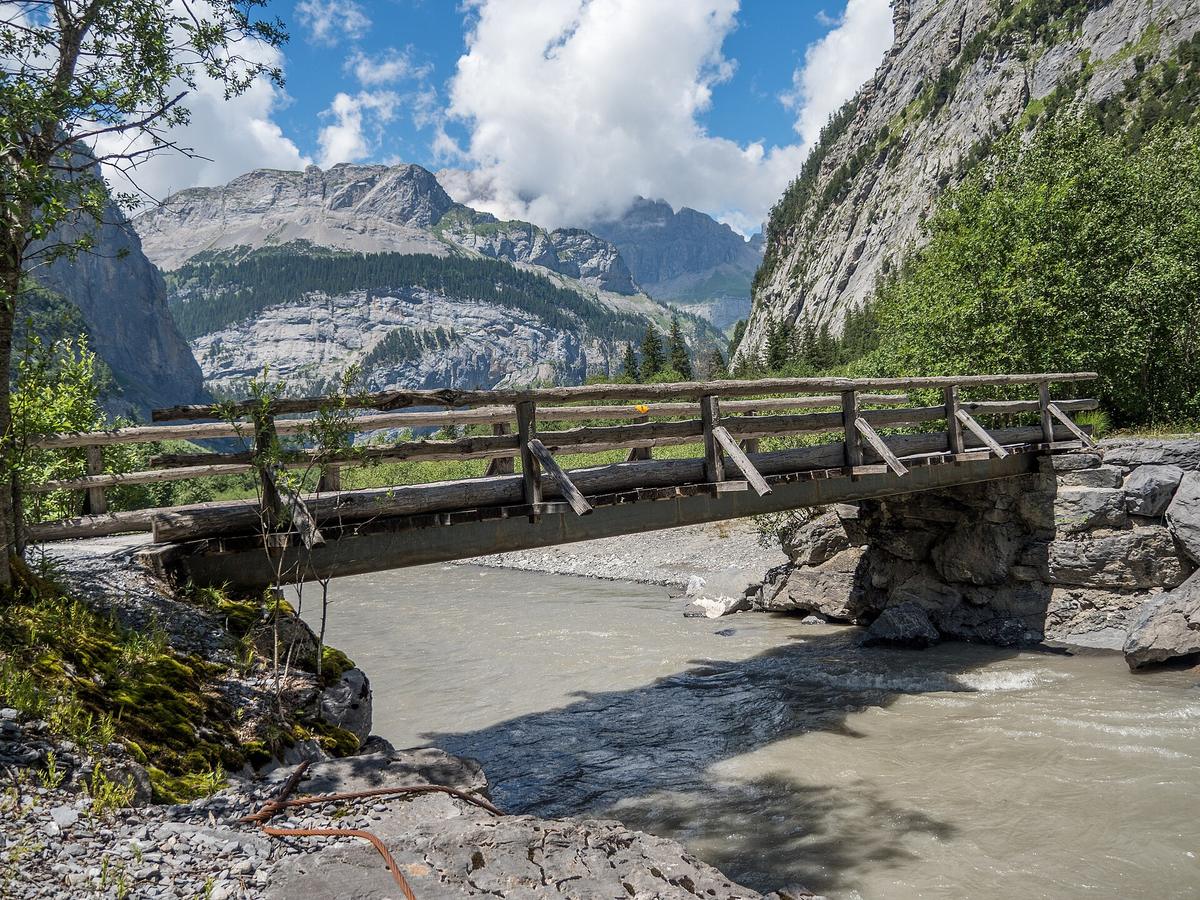
A wobbly wire bridge crosses the young Kander River just above Selden. It is the only place to get a clear view up the valley axis. Beyond the bridge, a trail continues for another 3 km to the Kanderfirn glacier viewpoint, where you see the retreating ice front at the valley head. This walk is flat and takes about an hour from Selden each way. The glacier has receded visibly in the last decade; the viewpoint is more valuable as a lesson in alpine climate change than as a scenic spectacle. Go early in the morning when the light hits the ice face.
The Lötschenpass Crossing
This is the serious walk. From Selden, the Lötschenpass route climbs 1,150 metres to the 2,690-metre pass and drops into the Lötschental at Ferden, 14 km and 6 to 7 hours later. It is rated T4 on the SAC hiking scale: alpine terrain with exposure, snowfields that persist into July, and rockfall risk. Sturdy mountain boots, weather protection, and a full day's food and water are mandatory. The pass is open July to September only, and conditions change daily. Do not attempt this as a day trip from Kandersteg unless you have a car waiting in Ferden. Returning the same day requires a 2.5-hour bus and train loop through the Lötschberg tunnel.
Why the Gasterntal Exists Outside the Usual Swiss Itinerary
The access road restriction is deliberate. The Municipality of Kandersteg limits vehicle numbers to preserve the valley's character, and it works: the Gasterntal is quiet even in August when Oeschinensee has a 90-minute cable car queue and the Jungfrau crowds choke Interlaken. The valley takes a small number of visitors on a peak day, most of them Swiss day-walkers who know the permit system. The trade-off is that you cannot treat it as a quick add-on to a Kandersteg itinerary. The valley is a full-day commitment even if you only walk to the suspension bridge and back, because the bus schedule forces you to leave by 16:30 or walk the 5 km road.
One common mistake is assuming you can see the Gasterntal, Oeschinensee, Blausee, and the Gemmi in two days. You cannot. The valley is linear and its side branches are dead ends; each district of Kandersteg consumes a full day, and you cannot shortcut between them without returning to the valley floor.
The Gasterntal is best for hikers who want high-alpine trails without the crowds, families with children old enough to manage the 90-minute walk in, and travellers who specifically seek silence rather than a scene. It is not for nightlife seekers, luxury shoppers, or anyone who expects a car-free village centre with cobbled lanes. It is also not for visitors who want a large interconnected ski circus with dozens of lifts; the valley is a collection of small separated pockets, not one continuous resort.
When to Go
Match the Gasterntal to the season. July and August are the only months when all trails are snow-free and the huts are open. Late February to early March works for ski touring on spring snow. Avoid mid-April to mid-June, when cable cars and huts close for the shoulder-season break and high trails remain snow-covered. Avoid late October to mid-December, when nothing operates and the valley sits in deep shade. The road itself closes approximately late October to mid-May. The municipality revises that schedule annually based on snowfall.

Common Questions
Can I drive into the Gasterntal without a permit?
No. Day visitors must park in Kandersteg. The single-lane Gasterntalstrasse is restricted to residents, accommodation guests, and permit holders. The permit costs about CHF 15 and is issued by the Municipality of Kandersteg. Between 10:00 and 16:00 in peak months, even permit holders cannot drive.
What happens if I miss the last PostBus from Selden?
You walk. The last bus leaves Selden by 16:30 even in July. There is no taxi service, no ride-share, and no phone signal to call for help. The walk back to Kandersteg takes 90 minutes on the road or the old mule track through the Chlus gorge.
Is the Gasterntal suitable for families with young children?
Only if your children can walk 90 minutes on a rocky natural path. The suspension bridge and the flat walk to the glacier viewpoint are manageable, but there are no facilities, no shops, and no escape if the weather turns. Families with toddlers are better suited to Oeschinensee or Blausee.
Do I need cash in the valley?
Yes. Hotel Waldhaus, Berghotel Gasterntal, and all alp huts above 1,500 metres do not have card terminals. The nearest cash machine is in Kandersteg village. Carry enough Swiss francs for meals, drinks, and one night's accommodation.
Read next
-
 Oeschinensee
The turquoise Oeschinensee under sheer cliffs is the Kandertal's UNESCO centrepiece—here's how to beat the cable car queue and walk the full circuit safely.
Oeschinensee
The turquoise Oeschinensee under sheer cliffs is the Kandertal's UNESCO centrepiece—here's how to beat the cable car queue and walk the full circuit safely.
-
 Sunnbüel und Gemmipass
The Sunnbüel cable car lifts you from Kandersteg to the start of the Gemmi Pass trail to Leukerbad. The walk is one-way, and the return loop takes planning.
Sunnbüel und Gemmipass
The Sunnbüel cable car lifts you from Kandersteg to the start of the Gemmi Pass trail to Leukerbad. The walk is one-way, and the return loop takes planning.
-
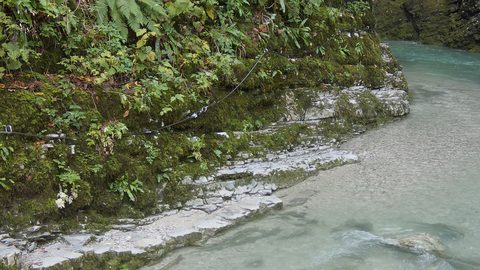 Allmenalp
The Allmenalp cable car above Kandersteg serves a via ferrata, a climbing crag, and a paraglider launch. It’s not a general viewpoint, and it shuts in the shoulder seasons.
Allmenalp
The Allmenalp cable car above Kandersteg serves a via ferrata, a climbing crag, and a paraglider launch. It’s not a general viewpoint, and it shuts in the shoulder seasons.
-
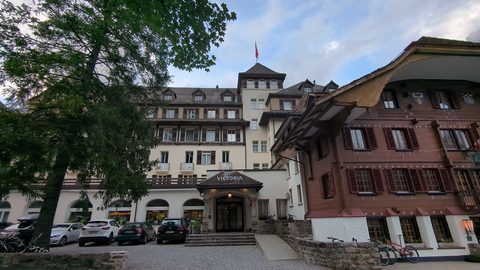 Kandertal Hotels and Mountain Inns Worth Booking
From the timber rooms of the Waldhaus in the Gasterntal to a dormitory bed at the Oeschinensee mountain hut, here are the Kandertal's real hotel options.
Kandertal Hotels and Mountain Inns Worth Booking
From the timber rooms of the Waldhaus in the Gasterntal to a dormitory bed at the Oeschinensee mountain hut, here are the Kandertal's real hotel options.
-
 Where to Stay in the Kandertal Valley for Hiking and Quiet
Compare the three places to sleep in the Kandertal—Kandersteg village, the Kiental farms, and the high hamlet of Griesalp—and find the right base for your hiking trip.
Where to Stay in the Kandertal Valley for Hiking and Quiet
Compare the three places to sleep in the Kandertal—Kandersteg village, the Kiental farms, and the high hamlet of Griesalp—and find the right base for your hiking trip.
-
 Things to Do in the Kandertal Summer Hiking and Winter Ski Touring
What there is to do in the Kandertal, split between summer hiking and winter ski touring, with the dead shoulder seasons clearly marked so you do not arrive to closed lifts.
Things to Do in the Kandertal Summer Hiking and Winter Ski Touring
What there is to do in the Kandertal, split between summer hiking and winter ski touring, with the dead shoulder seasons clearly marked so you do not arrive to closed lifts.
-
 Best Time to Visit the Kandertal and When to Stay Away
The Kandertal has two real seasons—high summer hiking and late-winter ski touring—and two long shoulder closures when the cable cars and huts simply shut.
Best Time to Visit the Kandertal and When to Stay Away
The Kandertal has two real seasons—high summer hiking and late-winter ski touring—and two long shoulder closures when the cable cars and huts simply shut.
-
 Getting Around the Kandertal Without a Car
The Kandertal runs on PostBuses with early last departures and no taxi backup. Learn the Gasterntal road rules, the SBB app, and why offline maps matter.
Getting Around the Kandertal Without a Car
The Kandertal runs on PostBuses with early last departures and no taxi backup. Learn the Gasterntal road rules, the SBB app, and why offline maps matter.
-
 Kandertal Itineraries for Two Days Four Days or a Week
Plan your Kandertal days around the reality that each side valley takes a full day and you cannot shortcut between them—here are itineraries for two, four and seven days.
Kandertal Itineraries for Two Days Four Days or a Week
Plan your Kandertal days around the reality that each side valley takes a full day and you cannot shortcut between them—here are itineraries for two, four and seven days.