Langlauf in Kandersteg: The Loipes, the Season, and What Makes It Serious
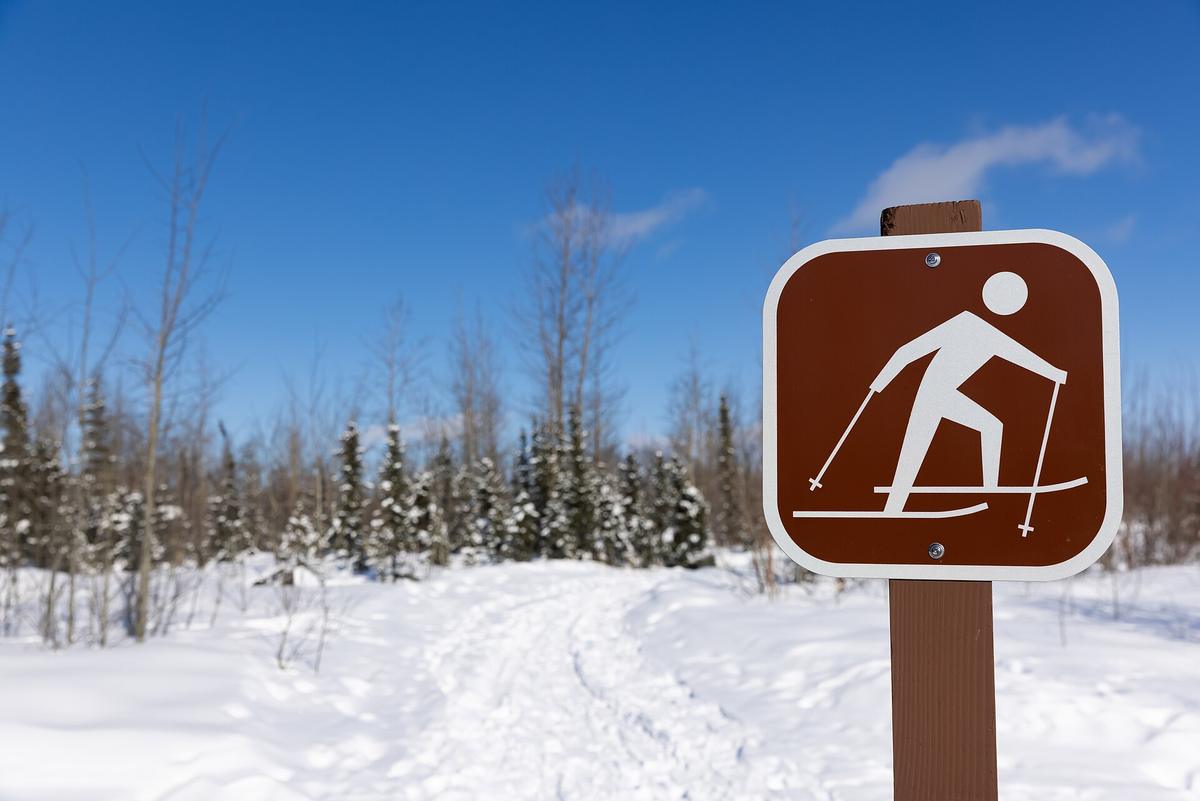
Kandersteg is a cross-country skiing village, not a downhill resort. Its loipe network runs along the valley floor at 1,100m, with reliable snow from late December into March.
.jpg)
Why Kandersteg Cross-Country Skiing is Different
You are here because you want to ski on groomed trails, not stand in a lift queue. Kandersteg is the cross-country destination in the Bernese Oberland because it has no downhill pistes inside the municipality at all. The entire valley infrastructure exists for langlauf. The valley floor sits at 1,174m, high enough that the Kandertal-Loipe network opens when the snow base reaches 30cm, usually mid-December, and holds until mid-March in most seasons. The sweet spot is late February into early March, when the spring snow is stable on the valley trails and the high-altitude trail at 1,934m still has reliable cover from November into April.
The 60km Kandertal-Loipe: What the Network Actually Contains
The groomed network runs north-south across three municipalities: Kandersteg, Kandergrund, and Reichenbach im Kandertal. Total length is 60km, split into 28km of blue trails, 24km of red trails, and 8km of black trails. Classic skiers get the full 60km of set tracks, each track 70mm wide. Skaters get 32km of groomed lane, minimum 4m wide. The longest continuous segment is the 18km stretch from Kandersteg village to Reichenbach, which takes about 90 minutes at a steady classic pace. The network connects at Blausee, Mitholz in Kandergrund, and Kiental in Reichenbach, so you can break the route into shorter loops. The southern terminus is Kandersteg village; the northern terminus is Reichenbach.
Night Skiing and the Beginner Loop
The Nachtloipe Kandersteg is a 3km lit loop on the village edge, open 17:00 to 21:00. It is blue-rated and flat enough for a first-timer. The dedicated beginner area is a 1.5km flat loop near the ice rink in Kandersteg village, also blue. If you are learning, the Schweizer Skischule Kandersteg runs 90-minute group lessons at the village trailhead. Expect to pay roughly CHF 45 per adult for a group session; private lessons run about CHF 90 per hour. Tourismus Kandertal sets the rates each season, so check the tourist office website for the current figure. Rent classic or skating gear from Intersport Kandersteg in the village centre. A classic set costs in the region of CHF 35 per day, a skating set around CHF 40. Intersport does not take online reservations; book in person when you arrive.
High-Altitude Option: The Sunnbüel Trail
The 12km trail at Sunnbüel sits at 1,934m on the east-facing terrace above Kandersteg. Access is by the Luftseilbahn Kandersteg-Sunnbüel cable car, which runs from November into April, 08:30 to 16:30. Journey time is 8 minutes. The route is groomed daily and is the most reliable option when the valley floor is thin. Snow here holds from November into April. The backdrop is the Doldenhorn and Blümlisalp massifs. No lift queues, no crowds. The cable car base station is at 1,176m, a five-minute walk from the railway station.
Trail Fees and Grooming Schedule
The Kandertal-Loipe requires a day pass. An adult day pass costs in the region of CHF 8, a child aged 6 to 16 around CHF 4. Tourismus Kandertal publishes the current price each season. A season pass runs about CHF 80 for an adult, CHF 40 for a child. Pay at self-service boxes at trailheads, the tourist office, or online. Trail rangers do spot checks. Grooming happens overnight with a PistenBully, so trails are ready by 08:00. Valley trails are groomed daily when the base depth is sufficient. The high-altitude Sunnbüel trail is groomed daily throughout its operating season.
The Season Window: When the Loipes Exist and When They Do Not
The valley loipes do not exist before late December and melt out by mid-March in warm years. The trigger for opening is a 30cm base depth on the valley floor. In a normal winter, that happens around mid-December. The 2024 season ran from December 18 to March 12. Do not book a trip for early December and expect to ski. The Sunnbüel trail opens earlier and closes later, November into April, but the cable car stops running after April. The Sunnbüel route and the cable car both shut down from mid-April to mid-June. The high trails turn dangerously soft, and the huts close. The valley is also dead from late October to mid-December, when nothing operates and the valley sits in deep shade.
What Goes Wrong
The most common mistake is assuming you can combine valley trails and the Sunnbüel route in a single morning. The valley floor is linear, but the side branches are dead ends. Getting to Sunnbüel requires the cable car from Kandersteg. It is an 8-minute ride, but you need to be at the base station by 08:30 to catch the first car and have the trail to yourself. Arrive at 10:00 and you share the terrace with day-trippers who came for the view, not the skiing. The valley network itself is 18km end to end; skiing the full length from Kandersteg to Reichenbach and back is a 36km day, about 3 to 4 hours at a touring pace. You cannot shortcut between side valleys without returning to the valley floor.
The other common failure: assuming the bus system will get you back. PostBus is the only public transport. Drivers do not sell tickets on board; you need coins or the SBB Mobile app. The last bus from Griesalp or the Gasterntal can leave as early as 16:30, even in summer. In winter, the schedule is even sparser. Download the SBB timetable and offline maps before you leave Spiez. Swisscom has 4G in Kandersteg village and at Oeschinensee but zero signal in the Gasterntal and Griesalp. Sunrise and Salt are patchy even in the valley.
| Trail | Length | Altitude | Difficulty | Season |
|---|---|---|---|---|
| Kandertal-Loipe (valley floor) | 60 km | 1,170–1,200 m | Blue 28 km / Red 24 km / Black 8 km | Mid Dec–mid Mar (30 cm base required) |
| Sunnbüel trail | 12 km | 1,934 m | Red (high alpine) | Nov–Apr (cable car operation) |
| Nachtloipe Kandersteg | 3 km | 1,174 m | Blue | 17:00–21:00, Dec–Mar |
The Kandersteg Ski Marathon and Why it Matters
The Kandersteg Ski Marathon is a Worldloppet series member, held in January. The next edition is 2027, organised by the Kandersteg Ski Club. Distances are 25km and 50km, classic technique only. The marathon uses the Kandertal-Loipe network. If you are not racing, avoid the village on race day. The trails close until the afternoon and the train station gets crowded. The marathon is the only time the valley sees a real crowd. Every other day, you ski alone.
Kandersteg's cross-country tradition goes back to the 1920s. The first international race was held in the 1930s. The tourist office publishes the exact year if you need it. What matters for you: the valley has been doing this longer than most Swiss resorts, and the grooming standard shows it.

Arrival and Getting Around
Fly into Bern (BRN) or Zurich (ZRH). From Bern, take the train to Spiez, change for the BLS Lötschberg line to Kandersteg station. Total journey time is 65 minutes. A full-fare ticket costs in the region of CHF 35 to 40; SBB sets the current price. From Zurich, the journey is via Bern or Spiez, 2 hours 15 minutes. Expect to pay roughly CHF 75 to 80. Trains run hourly year-round. No airport bus serves the valley directly.
In the village, everything is walkable from the railway station. The tourist office, Intersport, the beginner trail, and the Sunnbüel cable car base are all within a five-minute walk. For the northern trail sections in Kandergrund and Reichenbach, take the train one stop or use the PostBus. The single biggest trip-up: PostBus drivers do not sell tickets on board. You need the SBB Mobile app or coins. Download the timetable before you arrive. Signal drops in the Gasterntal and Griesalp.
If you drive, the Gasterntal access requires a day permit. Expect to pay in the region of CHF 15; check the current fee with the municipality. Private cars are banned from 10:00 to 16:00 in peak months. The road is single-lane with a controlled timetable. Park in Kandersteg village and take the bus instead.
What to Eat and Where to Refuel on the Trails
On the valley floor, your best bet is the Blausee lake restaurant, which serves fresh trout from the organic farm on site. Entry to Blausee costs in the region of CHF 12; the Blausee management sets the current admission price. At the Sunnbüel mountain station, order rösti with melted Raclette du Valais. At the Griesalp hotel, the wild berry tart with cream uses berries foraged on the alp. In the village, the Kandersteger Bier is brewed locally, an unfiltered lager and a wheat beer. The Ruedihus, an 18th-century wooden farmhouse now a small hotel, serves solid mountain food. Cash is mandatory at many alp huts and the Griesalp hotel; no card terminals above 1,500m.
Pack your own food for the Gasterntal and the Üschinen valley. There are no facilities in either. The air-dried beef from the farm at Heimritz is a good hiking snack but you need cash to buy it.
Who This Place is for and Who Should Skip it
Kandersteg cross-country is for skiers who want serious terrain without the circus. It is for classic skiers who want 60km of set tracks without sharing them with skaters on blind corners. It is for skaters who want 32km of continuous groomed lane. It is for families with young children who need the flat beginner loop near the ice rink and the night trail for evening runs. It is for ski tourers who want to use the Sunnbüel trail as a warm-up for the Gemmi crossing.
Skip Kandersteg if you want nightlife, luxury shopping, or a car-free village centre with cobbled lanes. Skip it if you expect a large interconnected ski circus with dozens of lifts. Skip it if you want to see Oeschinensee, Blausee, the Gasterntal, and the Gemmi in two days. Each side valley consumes a full day and you cannot shortcut between them without returning to the valley floor.
The one thing that most often goes wrong: English-speaking visitors arrive having booked for downhill skiing, find the cross-country trails on arrival, and have no gear and no lesson booked. Do not be that visitor. Pack for langlauf, book the ski school online via the tourist office, and arrive in Kandersteg with your skating or classic technique already clear in your mind.
Read next
-
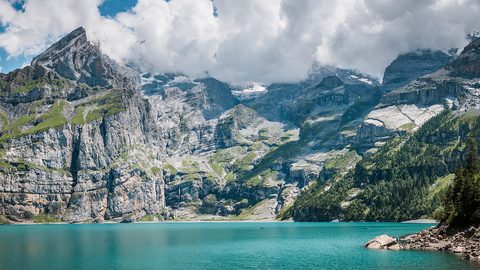
 Oeschinensee
The turquoise Oeschinensee under sheer cliffs is the Kandertal's UNESCO centrepiece—here's how to beat the cable car queue and walk the full circuit safely.
Oeschinensee
The turquoise Oeschinensee under sheer cliffs is the Kandertal's UNESCO centrepiece—here's how to beat the cable car queue and walk the full circuit safely.
-
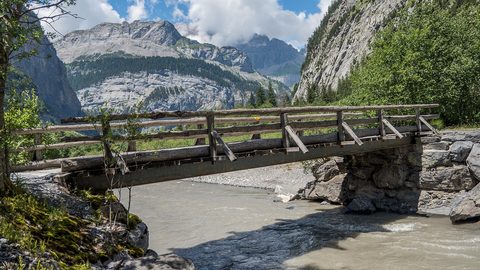 Gasterntal
The Gasterntal is a dead-end glacial valley behind Kandersteg with a controlled single-lane road, no phone signal, and a historic timber hotel. Here’s how to get in.
Gasterntal
The Gasterntal is a dead-end glacial valley behind Kandersteg with a controlled single-lane road, no phone signal, and a historic timber hotel. Here’s how to get in.
-
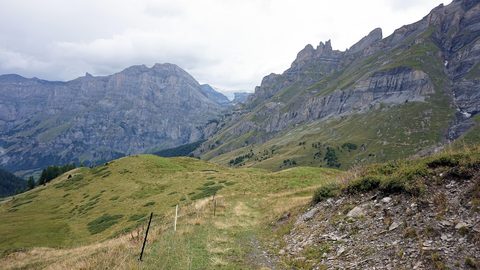 Sunnbüel und Gemmipass
The Sunnbüel cable car lifts you from Kandersteg to the start of the Gemmi Pass trail to Leukerbad. The walk is one-way, and the return loop takes planning.
Sunnbüel und Gemmipass
The Sunnbüel cable car lifts you from Kandersteg to the start of the Gemmi Pass trail to Leukerbad. The walk is one-way, and the return loop takes planning.
-
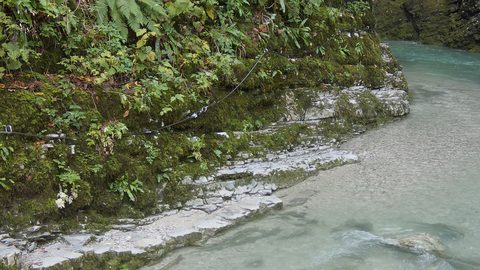 Allmenalp
The Allmenalp cable car above Kandersteg serves a via ferrata, a climbing crag, and a paraglider launch. It’s not a general viewpoint, and it shuts in the shoulder seasons.
Allmenalp
The Allmenalp cable car above Kandersteg serves a via ferrata, a climbing crag, and a paraglider launch. It’s not a general viewpoint, and it shuts in the shoulder seasons.
-
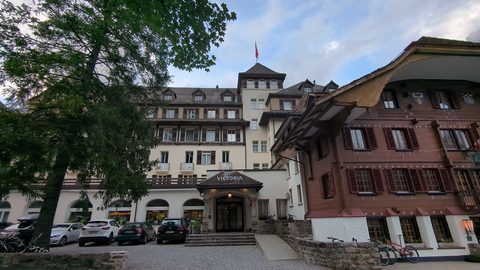 Kandertal Hotels and Mountain Inns Worth Booking
From the timber rooms of the Waldhaus in the Gasterntal to a dormitory bed at the Oeschinensee mountain hut, here are the Kandertal's real hotel options.
Kandertal Hotels and Mountain Inns Worth Booking
From the timber rooms of the Waldhaus in the Gasterntal to a dormitory bed at the Oeschinensee mountain hut, here are the Kandertal's real hotel options.
-
 Where to Stay in the Kandertal Valley for Hiking and Quiet
Compare the three places to sleep in the Kandertal—Kandersteg village, the Kiental farms, and the high hamlet of Griesalp—and find the right base for your hiking trip.
Where to Stay in the Kandertal Valley for Hiking and Quiet
Compare the three places to sleep in the Kandertal—Kandersteg village, the Kiental farms, and the high hamlet of Griesalp—and find the right base for your hiking trip.
-
 Things to Do in the Kandertal Summer Hiking and Winter Ski Touring
What there is to do in the Kandertal, split between summer hiking and winter ski touring, with the dead shoulder seasons clearly marked so you do not arrive to closed lifts.
Things to Do in the Kandertal Summer Hiking and Winter Ski Touring
What there is to do in the Kandertal, split between summer hiking and winter ski touring, with the dead shoulder seasons clearly marked so you do not arrive to closed lifts.
-
 Best Time to Visit the Kandertal and When to Stay Away
The Kandertal has two real seasons—high summer hiking and late-winter ski touring—and two long shoulder closures when the cable cars and huts simply shut.
Best Time to Visit the Kandertal and When to Stay Away
The Kandertal has two real seasons—high summer hiking and late-winter ski touring—and two long shoulder closures when the cable cars and huts simply shut.
-
 Getting Around the Kandertal Without a Car
The Kandertal runs on PostBuses with early last departures and no taxi backup. Learn the Gasterntal road rules, the SBB app, and why offline maps matter.
Getting Around the Kandertal Without a Car
The Kandertal runs on PostBuses with early last departures and no taxi backup. Learn the Gasterntal road rules, the SBB app, and why offline maps matter.