The BLS Lötschberg Car Shuttle From Kandersteg to Goppenstein
The BLS Lötschberg car shuttle loads your vehicle onto a train at Kandersteg and delivers you to Goppenstein in the Valais 15 minutes later. No need to drive the long way round.
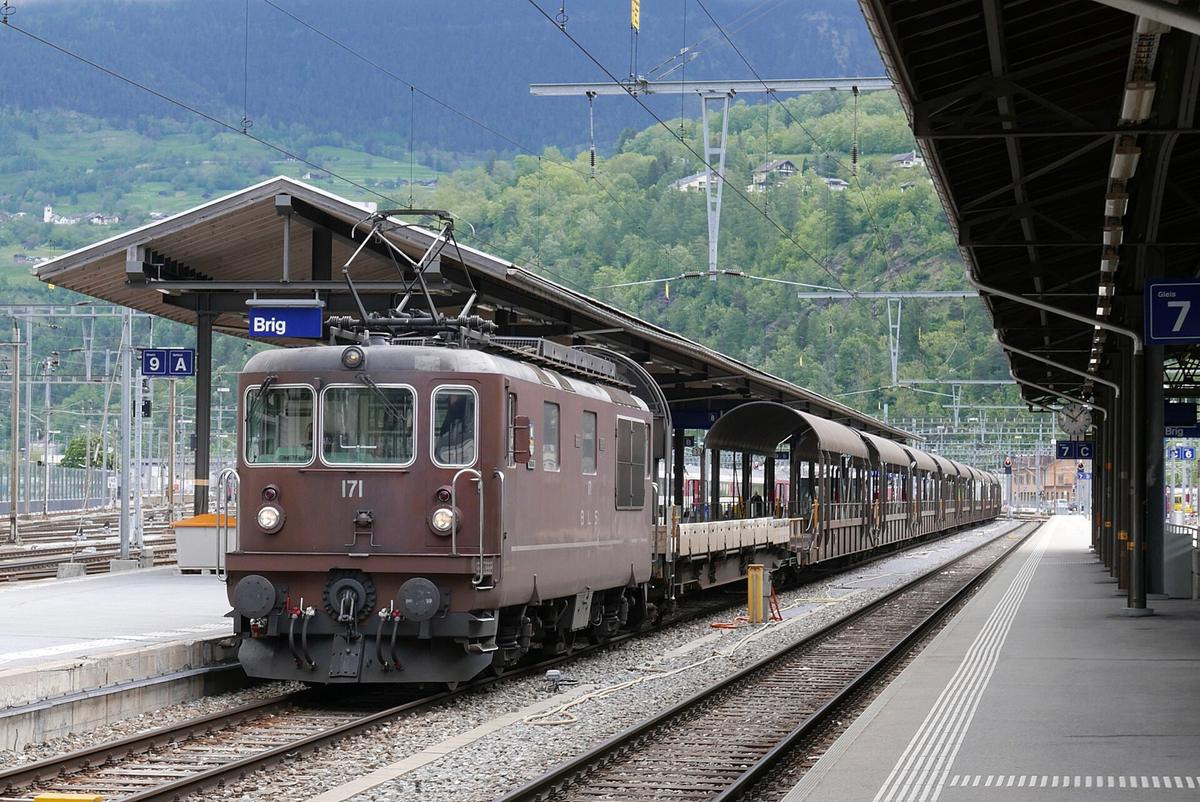

The Lötschberg Car Train is Faster Than Driving the Long Way Round. Much Faster
Most drivers assume the quickest way from the Bernese Oberland to Valais is to go around the mountains. It is not. The BLS Lötschberg car shuttle train from Kandersteg to Goppenstein cuts a 3.5 to 4 hour drive down to 20 to 30 minutes total, from the moment you join the queue at the Kandersteg ramp to the moment you drive off in Valais. The tunnel itself takes 15 minutes. The Simplon pass route, the Grimsel and Furka pass road, the Susten loop: all of them add at least three hours. The car train runs year round, every day. A standard car costs roughly CHF 30, set by BLS; check their website for the current fare. That is cheaper than the fuel you would burn going the long way.
How the Boarding Process Works: Step by Step
Drive to the Kandersteg loading area. The entrance is on the main road through the village, signed for the BLS Autoverlad. Buy a ticket at the toll booth before the ramp, or online in advance through the BLS Mobil app or the BLS website. The booth accepts card and cash.
Follow the Marshal's Signal
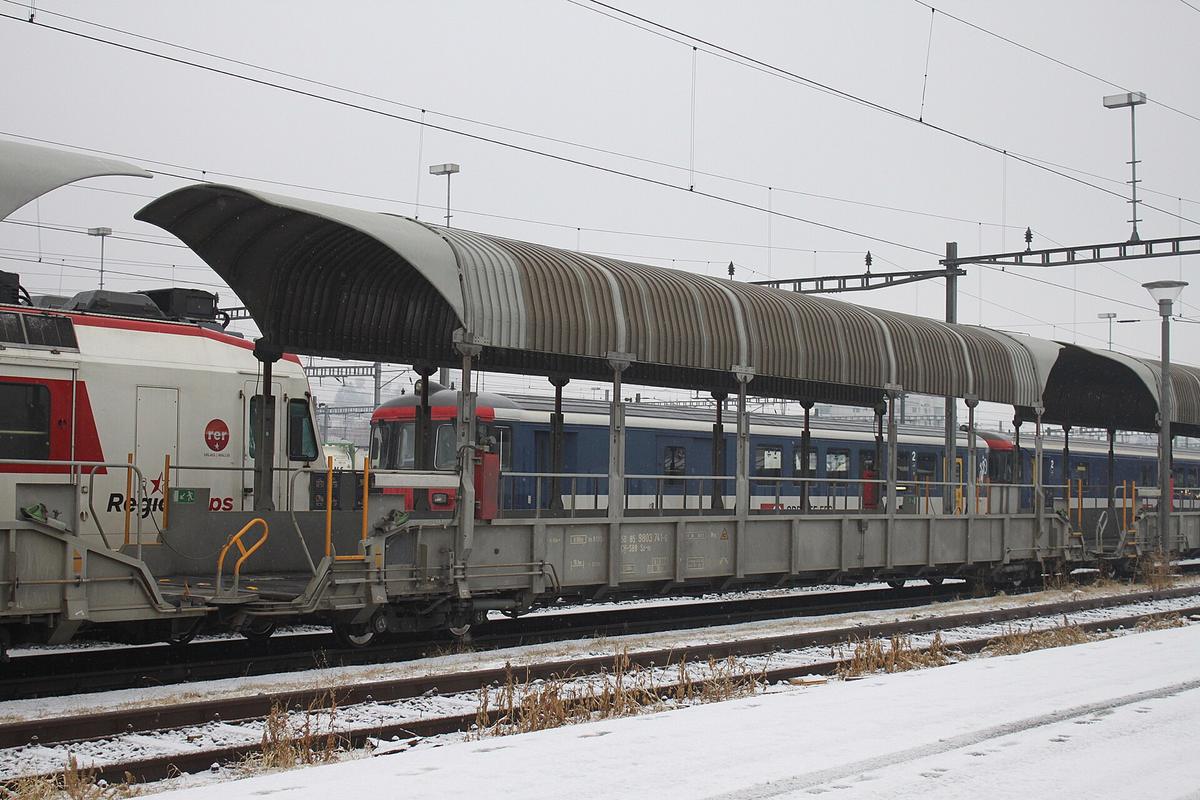
A uniformed marshal directs you onto the flatbed wagon. Drive straight on. No reversing. The wagons are side by side, and once you are parked the marshal or a crew member may block your door so you cannot open it. This is normal. Stay inside your vehicle with the engine off and the handbrake on. The train lights illuminate the carriage. The tunnel itself is unlit.
The Transit and the Exit
You cannot get out of the car. You cannot walk around the train. Sit in your seat, engine off, for the 14.6 kilometre tunnel crossing. There is no view, no signal in the tunnel, and no service car. Download anything you need before you board. The train emerges at Goppenstein station in Valais, at 1,216 metres, almost exactly the same altitude as Kandersteg. The wagon doors open forward. Drive straight off the flatbed, no turning needed. From the front of the queue at Kandersteg to the exit at Goppenstein, the whole process takes 20 to 30 minutes.
Queue Times and Peak Periods
In peak periods the queue itself adds 30 to 60 minutes. On extreme weekends it can reach 2 hours. The busiest direction on Saturday mornings is southbound, Kandersteg to Goppenstein. Saturday afternoons and evenings, and all day Sunday, the peak reverses northbound. Easter, Ascension weekend, and the first two weekends of the Bern canton school summer holidays are the worst. Plan around those if you can.
Why You Would Use the Car Shuttle Instead of Driving
The single reason to take this train is the time saving. From Kandersteg to Goppenstein by road via the Simplon pass is 3 hours 30 minutes to 4 hours. Via the Grimsel and Furka passes, when they are open (roughly June to October), the same trip takes 3 hours 30 minutes to 4 hours 30 minutes. The car train does it in 20 to 30 minutes. There is no break-even calculation. The train is always faster. Drive the long way only if you want to visit the passes themselves, or if the car train queue is longer than you can tolerate.
Two Destinations That Make the Shuttle Worthwhile
From the Kandersteg side, the shuttle drops you directly into the Valais. Two places in particular justify the crossing. The Lötschental is a deep, traditional side valley with scattered hamlets and high altitude trails, 25 minutes by bus from Goppenstein. Leukerbad, the thermal bath town, is a 40 minute drive from Goppenstein. It is also reachable on foot from Kandersteg via the 4 hour Gemmi pass crossing if you want a one-way hike. Both are difficult to reach from the Kandertal by any other route without a long drive.
When the Car Train Is Your Only Option
The Kandertal cable cars, such as the Oeschinensee lift and the Sunnbüel gondola, close for a shoulder season break from mid April to mid June and again from late October to mid December. The car train does not close. It runs every day, from early morning until nearly midnight, with departures every 30 minutes off peak and a continuous shuttle every 7.5 minutes at peak. If you need to cross the Alpine divide in April or November, when the high passes are still snowed under and the local lifts are shut, the Lötschberg car train is your only reliable year round connection between the Bernese Oberland and Valais.
What to Do If You Miss the Train or the Queue is Too Long
The car train runs until late, so missing the last departure is unlikely unless you arrive after midnight. If the queue is 2 hours long on a peak Saturday, you have two choices: wait, or drive the long way. The Simplon pass road is open year round. From Kandersteg, take the A6 toward Spiez, then the A8 toward Brig, then the A9 through the Simplon tunnel to Domodossola and loop back north to Goppenstein. That route takes 3 hours 30 minutes to 4 hours. If the queue is 90 minutes and the drive is 3.5 hours, waiting is faster. If the queue is 2 hours and the drive is 3.5 hours, waiting is still faster, but only just. Check the BLS website or the BLS Mobil app for live queue status before you drive to the ramp.
Vehicle Types, Sizes, and Pricing
The car train accepts standard cars, motorhomes, motorbikes, trailers, and LPG vehicles. The height limit is 4.0 metres. The width limit is 2.5 metres. The total weight limit is 44 tonnes. For LPG vehicles, the tank must be switched off and you must declare it at check in. Dangerous goods beyond limited quantities as per ADR regulations are prohibited.
BLS sets pricing by vehicle length, height, and any trailer. A standard car costs around CHF 30. A car with a trailer runs roughly CHF 45. A motorbike is about CHF 20. A motorhome up to 6 metres long and 3 metres high costs in the CHF 40 to 50 band. Prices change annually. Check the BLS website for the current tariff before you travel.

| Route | Time | Cost (Car) | Open |
|---|---|---|---|
| Car train Kandersteg–Goppenstein | 20–30 minutes total | Roughly CHF 30 (BLS sets the fare) | Year round, early to late |
| Simplon pass (A9/A8) | 3 h 30 min – 4 h | Fuel + tolls | Year round |
| Grimsel/Furka passes | 3 h 30 min – 4 h 30 min | Fuel only | June–October |
| Furka car train (Oberwald–Realp) | 15 minutes crossing | Similar pricing | Summer only |
The Most Common Mistake Travellers Make with the Car Train
Drivers assume the car train is a shortcut to the Valais for day trips. It is, but the Kandertal side valleys are dead ends. You cannot visit Oeschinensee, Blausee, Gasterntal, and the Gemmi in two days, and the car train does not help with that. Each side valley consumes a full day because you have to return to the valley floor to get to the next one. The single biggest trip up is believing you can see everything from the car. You cannot. The car train moves your vehicle, not your itinerary. Use it to reach the Lötschental or Leukerbad, not to cram more sights into a short stay.
Read next
-
 Oeschinensee
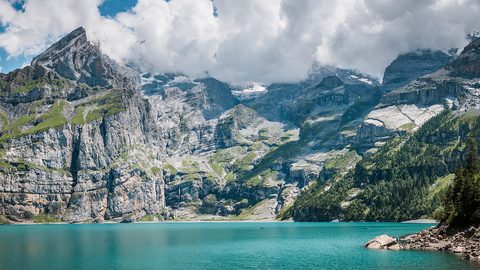
The turquoise Oeschinensee under sheer cliffs is the Kandertal's UNESCO centrepiece—here's how to beat the cable car queue and walk the full circuit safely.
Oeschinensee
The turquoise Oeschinensee under sheer cliffs is the Kandertal's UNESCO centrepiece—here's how to beat the cable car queue and walk the full circuit safely.
-
 Gasterntal
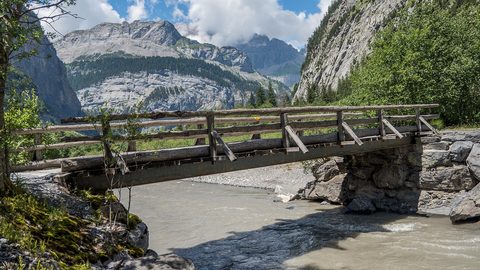
The Gasterntal is a dead-end glacial valley behind Kandersteg with a controlled single-lane road, no phone signal, and a historic timber hotel. Here’s how to get in.
Gasterntal
The Gasterntal is a dead-end glacial valley behind Kandersteg with a controlled single-lane road, no phone signal, and a historic timber hotel. Here’s how to get in.
-
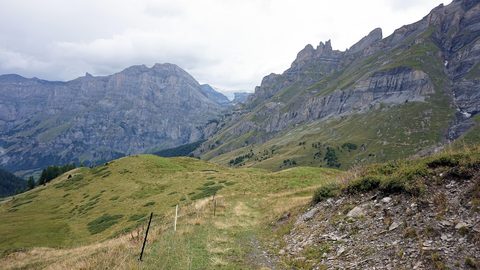 Sunnbüel und Gemmipass
The Sunnbüel cable car lifts you from Kandersteg to the start of the Gemmi Pass trail to Leukerbad. The walk is one-way, and the return loop takes planning.
Sunnbüel und Gemmipass
The Sunnbüel cable car lifts you from Kandersteg to the start of the Gemmi Pass trail to Leukerbad. The walk is one-way, and the return loop takes planning.
-
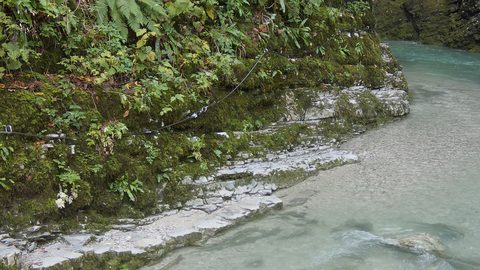 Allmenalp
The Allmenalp cable car above Kandersteg serves a via ferrata, a climbing crag, and a paraglider launch. It’s not a general viewpoint, and it shuts in the shoulder seasons.
Allmenalp
The Allmenalp cable car above Kandersteg serves a via ferrata, a climbing crag, and a paraglider launch. It’s not a general viewpoint, and it shuts in the shoulder seasons.
-
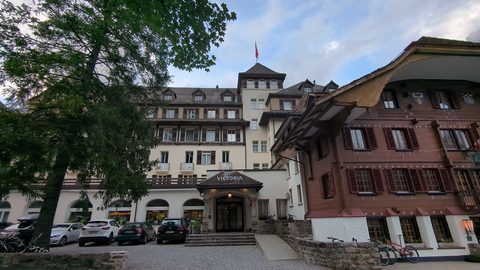 Kandertal Hotels and Mountain Inns Worth Booking
From the timber rooms of the Waldhaus in the Gasterntal to a dormitory bed at the Oeschinensee mountain hut, here are the Kandertal's real hotel options.
Kandertal Hotels and Mountain Inns Worth Booking
From the timber rooms of the Waldhaus in the Gasterntal to a dormitory bed at the Oeschinensee mountain hut, here are the Kandertal's real hotel options.
-
 Where to Stay in the Kandertal Valley for Hiking and Quiet
Compare the three places to sleep in the Kandertal—Kandersteg village, the Kiental farms, and the high hamlet of Griesalp—and find the right base for your hiking trip.
Where to Stay in the Kandertal Valley for Hiking and Quiet
Compare the three places to sleep in the Kandertal—Kandersteg village, the Kiental farms, and the high hamlet of Griesalp—and find the right base for your hiking trip.
-
 Things to Do in the Kandertal Summer Hiking and Winter Ski Touring
What there is to do in the Kandertal, split between summer hiking and winter ski touring, with the dead shoulder seasons clearly marked so you do not arrive to closed lifts.
Things to Do in the Kandertal Summer Hiking and Winter Ski Touring
What there is to do in the Kandertal, split between summer hiking and winter ski touring, with the dead shoulder seasons clearly marked so you do not arrive to closed lifts.
-
 Best Time to Visit the Kandertal and When to Stay Away
The Kandertal has two real seasons—high summer hiking and late-winter ski touring—and two long shoulder closures when the cable cars and huts simply shut.
Best Time to Visit the Kandertal and When to Stay Away
The Kandertal has two real seasons—high summer hiking and late-winter ski touring—and two long shoulder closures when the cable cars and huts simply shut.
-
 Getting Around the Kandertal Without a Car
The Kandertal runs on PostBuses with early last departures and no taxi backup. Learn the Gasterntal road rules, the SBB app, and why offline maps matter.
Getting Around the Kandertal Without a Car
The Kandertal runs on PostBuses with early last departures and no taxi backup. Learn the Gasterntal road rules, the SBB app, and why offline maps matter.