Blausee in the Kandertal: What You Get for the Entry Fee
The Blausee in the Kandertal charges CHF 12 to enter a small forest lake. Here’s what that pays for, when it’s open, and how to reach it from Kandersteg.

Blausee in the Kandertal: What You Get for the Entry Fee
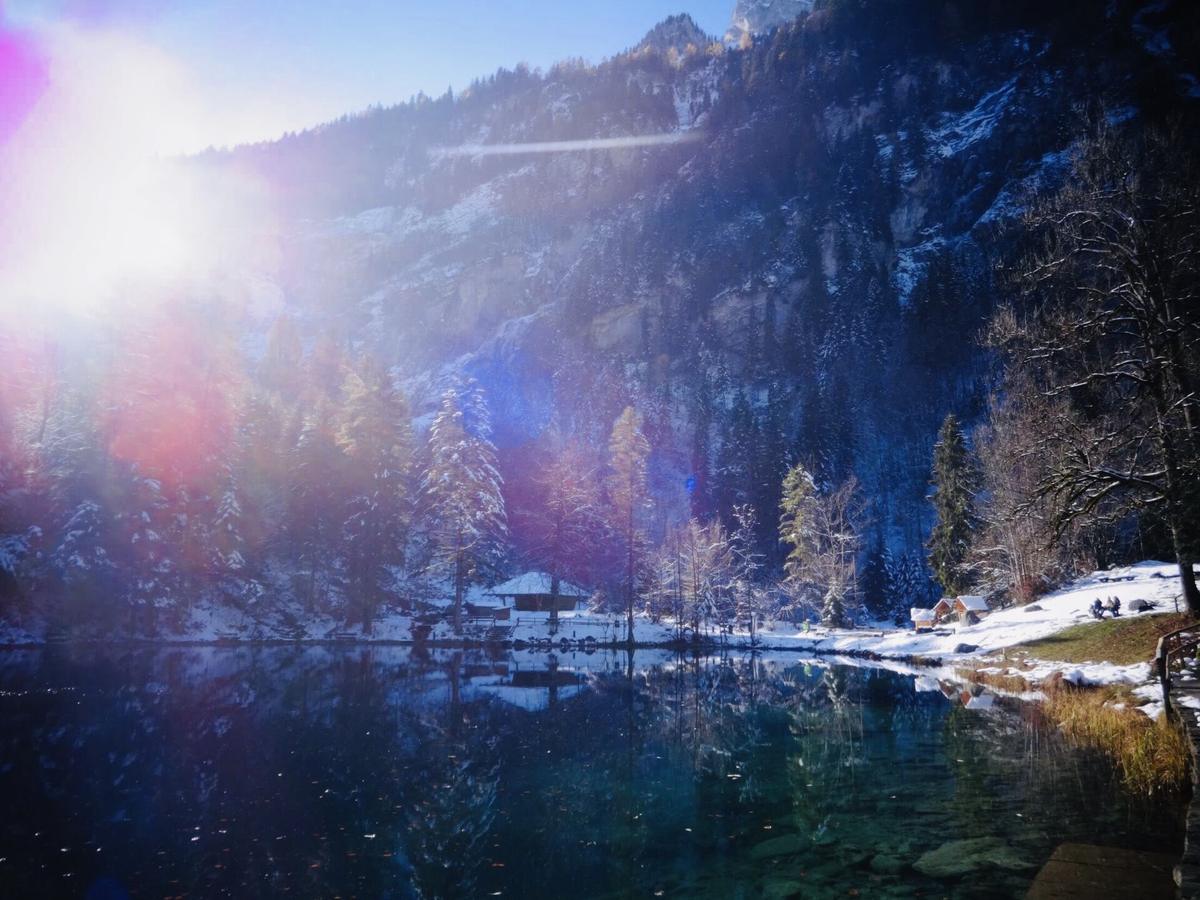
You are balking at the entry fee to see a lake. Stop. The price, roughly CHF 10 to 12 for an adult, buys one of the most accessible, well-kept nature stops in the entire Bernese Oberland, and it is the only option of its kind in the Kandertal that operates year-round. The Blausee is not a roadside pull-out. It is a private nature park with a working trout farm, a 600-metre step-free circuit path, a glass-bottomed boat, a restaurant and a playground. You are not paying to look at water. You are paying for the maintenance of all of it.
The lake itself is genuinely striking. The water is so clear you can see the pale limestone bed at depth, which gives the surface its signature blue. The legend says the colour comes from the tears of a maiden mourning a lost lover. The geology says it is clarity and rock. Either way, the effect holds in person, and it photographs well without filters.
Who the Blausee Suits
Bring small children who need a short, safe walk and visible fish. Photographers on a timed shoot get a guaranteed subject without a hike. Anyone who needs a wheelchair-accessible nature stop in a valley where most trails are steep and rough will find it here. And travellers in winter, because the Blausee stays open from late November through late March, while the Kandertal cable cars shut down for the shoulder season. In the deep months, this is the only curated nature experience in the valley that does not require snowshoes or a guide. The gate closes entirely for roughly a month between late October and late November. Plan around that gap.
- Adult entry: CHF 10-12 in 2026, variable by season. The operator publishes the rate in force; check before you go.
- Child entry (6-15): CHF 5-6 in 2026. Under 6 free.
- Opening hours: Summer (late March, late October) 09:00-21:00. Winter (late November, late March) 09:00-17:00. Closed late October to late November.
- Visit duration: 45-60 minutes without a meal. 1.5-2 hours with lunch at the Blausee Restaurant.
- Glass-bottomed boat: Short trip, roughly 10 minutes. CHF 5-7 per person in 2026. Separate from entry fee.
- Getting there: Postauto line 230, stop Blausee Kandergrund. 35-40 minutes from Spiez by train and bus, 65-75 minutes from Bern.
- Parking: On-site car park, included in the entry fee. Signposted turn-off from the Kantonsstrasse.
Why the Fee Exists and What it Maintains
Switzerland is full of free lakes. You can swim in the Thunersee for nothing. You can walk to Oeschinensee for the price of the cable car, which the operator sells as a return ticket. The Blausee charges because it is a managed landscape, not a natural one. The trout farm on site is the economic engine. The manicured paths, the boardwalk over the water, the rowboats, the playground and the restaurant all depend on the entry fee plus the boat ticket plus what you spend on lunch. The trout you eat at the Blausee Restaurant comes from the farm you just walked past. That is the loop. Pay it, and the place stays tidy.
What You Actually Do There
The circuit path is roughly 600 metres on gravel and boardwalk, completely step-free. Push a pram or a wheelchair around the whole lake. The glass-bottomed boat trip runs about 10 minutes and shows you the trout from above. The fish are visible from the shore anyway, so the boat is for the novelty, not the necessity. Skip it if you are on a budget and take the path slowly instead.
The restaurant serves the farm's trout fresh, and the hotel on site means you can stay overnight if you want the lake to yourself after the day-trippers leave. That is a real option in July and August, when the car park fills by 10:00 and the coach parties arrive in waves between 10:00 and 12:00. The worst crowding is summer weekends from 10:00 to 14:00. Arrive at 09:00 when the gate opens and you will have the circuit path nearly empty for the first hour.
How it Fits Into Your Kandertal Itinerary
The Kandertal is a collection of dead-end side valleys, not one continuous resort. Oeschinensee takes a full day. The Gasterntal takes a full day. The Gemmi crossing takes a full day. The Blausee is the exception. It sits right on the valley floor at Kandergrund, on the main road and the Postauto line 230, so it slots into a half-day without wrecking your schedule.
Use it as the arrival-day stop. Land at Bern airport, take the train to Spiez, change for the Lötschberg line to Kandersteg, and get off the bus at Blausee Kandergrund on the way to your accommodation. That is 65 to 75 minutes from Bern, and you have done a genuine sight without adding a separate excursion. Alternatively, use it on departure day when you have a train to catch and cannot risk a long hike. The 45-minute visit works perfectly with a 2-hour buffer before a train from Kandersteg.
The One Combo to Avoid
Do not try to combine it with Oeschinensee in the same morning. That is the valley's most common mistake. The side valleys are dead ends, and you cannot shortcut between them without returning to the valley floor. The Blausee is the valley floor. Park there, do the lake, then take the bus to the Oeschinensee cable car. But budget for the queue. In July and August, the cable car line exceeds 90 minutes from 10:00 onward. Arrive before 09:00 or after 14:00, or skip Oeschinensee entirely and take the quiet Ueschinen valley instead.
Winter, Shoulder Season and Practical Warnings
The Blausee is the Kandertal's year-round anchor. When the cable cars close for the shoulder season break from mid-April to mid-June, and again from late October to mid-December, the lake stays open. The summer hours run through late October, then it switches to winter hours from late November. The gap between late October and late November is the only time it shuts completely.
In winter, the lake does not freeze reliably and the surrounding snow makes the blue water pop even harder. The path is cleared and step-free, which is rare for any winter nature attraction in this valley. If you are ski touring at Sunnbüel or sleeping in a hut above the treeline, the Blausee is the reliable low-altitude backup when the weather closes in and the high trails turn white-out.
Cash, Buses and Signal
Bring cash for the restaurant and the boat. Many alp huts and the Griesalp hotel do not take cards, and the café's terminal may not work with foreign cards. The Postauto drivers do not sell tickets on board. You need coins or the SBB Mobile app loaded before you board. The last bus from Griesalp or the Gasterntal can leave as early as 16:30 even in summer, and there is no taxi backup. For the Blausee, the bus stop is on the main line so the risk is lower, but check the return timetable at the stop before you walk in.
Mobile signal is fine at the lake itself. Swisscom has 4G in Kandersteg village and at Oeschinensee, and the Blausee sits on that corridor. The dead zones are the Gasterntal and Griesalp, which have zero signal. Download offline maps and the SBB timetable before you leave Spiez, and you will not get caught.

| Axis | Blausee | Oeschinensee | Gasterntal |
|---|---|---|---|
| Visit duration | 45 min to 2 hours | Full day | Full day |
| Entry cost | CHF 10–12 adult | CHF 20 cable car return | CHF 15 car day permit |
| Accessibility | Step-free path | Steep lakeside trail | Rough gravel road |
| Winter access | Open, cleared path | Cable car closed | Road closed or restricted |
| Crowds | Peaks 10:00–14:00 summer | Queue over 90 min after 10:00 | Low, but no signal |
| Best for | Families, accessible stops | Hikers, photographers | Silence, raw nature |
Who Should Skip the Blausee Entirely
If you are a serious hiker on a three-day Kandertal itinerary with good weather, skip the Blausee. Your time is better spent on Oeschinensee, the Gemmi crossing or the Ueschinen valley. The lake is managed, groomed and curated. It is not an alpine experience. It is a garden with a lake in it.
On a strict budget, skip the glass-bottomed boat and bring a picnic. The restaurant is decent but not cheap, and the trout comes from the farm so the price reflects the freshness. You can see the fish from the boardwalk without paying extra. The entry fee is the fixed cost. Everything else inside is optional.
Visiting in late October or November? Check the closure window. The lake shuts completely for about a month between summer and winter hours. Do not make the detour without confirming the gate is open.
The honest caveat: the Blausee will never be the most dramatic sight in the Kandertal. Oeschinensee under the cliffs is bigger and wilder. The Gemmi is a true pass crossing. But those places demand full days, good weather and a tolerance for queues or rough terrain. The Blausee demands none of that. It is the reliable one. The one you can do with a hangover, with a toddler, in the rain, in February, or with 90 minutes before your train leaves. Pay the fee, walk the loop, eat the trout if you have time, and get back on the bus. That is what the money buys.
Common Questions
Is the Blausee entry fee worth it for a quick stop?
Yes, if you stay at least 45 minutes. The fee covers a step-free 600-metre path, a trout farm, a playground and a restaurant. If you only want to glance at water from the road, skip it. The fee is for the full loop, not a photo op.
Can I visit Blausee in winter when the cable cars are shut?
Yes. Winter hours run 09:00-17:00 from late November to late March. The path stays clear and step-free. It is the only maintained nature stop in the Kandertal that operates through the deep season. It closes only from late October to late November.
How long do I need for the glass-bottomed boat trip?
About 10 minutes. The boat shows you the trout farm from above, but you can see the fish clearly from the shore. If you are on a schedule, skip the boat and walk the circuit path instead. The extra charge is for the novelty, not the access.
Is Blausee suitable for a wheelchair or a pram?
Yes. The 600-metre circuit path is gravel and boardwalk, entirely step-free. The parking lot is on site and included in the entry fee. This is one of the few fully accessible nature stops in the Bernese Oberland. The boat is not wheelchair accessible.
Read next
-
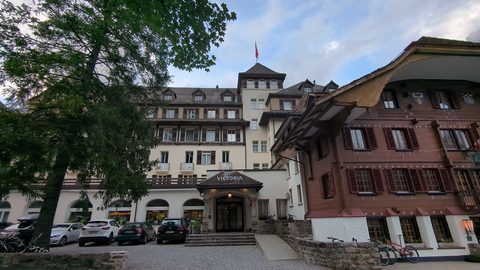
 Kandertal Hotels and Mountain Inns Worth Booking
From the timber rooms of the Waldhaus in the Gasterntal to a dormitory bed at the Oeschinensee mountain hut, here are the Kandertal's real hotel options.
Kandertal Hotels and Mountain Inns Worth Booking
From the timber rooms of the Waldhaus in the Gasterntal to a dormitory bed at the Oeschinensee mountain hut, here are the Kandertal's real hotel options.
-
 Where to Stay in the Kandertal Valley for Hiking and Quiet
Compare the three places to sleep in the Kandertal—Kandersteg village, the Kiental farms, and the high hamlet of Griesalp—and find the right base for your hiking trip.
Where to Stay in the Kandertal Valley for Hiking and Quiet
Compare the three places to sleep in the Kandertal—Kandersteg village, the Kiental farms, and the high hamlet of Griesalp—and find the right base for your hiking trip.
-
 Things to Do in the Kandertal Summer Hiking and Winter Ski Touring
What there is to do in the Kandertal, split between summer hiking and winter ski touring, with the dead shoulder seasons clearly marked so you do not arrive to closed lifts.
Things to Do in the Kandertal Summer Hiking and Winter Ski Touring
What there is to do in the Kandertal, split between summer hiking and winter ski touring, with the dead shoulder seasons clearly marked so you do not arrive to closed lifts.
-
 Best Time to Visit the Kandertal and When to Stay Away
The Kandertal has two real seasons—high summer hiking and late-winter ski touring—and two long shoulder closures when the cable cars and huts simply shut.
Best Time to Visit the Kandertal and When to Stay Away
The Kandertal has two real seasons—high summer hiking and late-winter ski touring—and two long shoulder closures when the cable cars and huts simply shut.
-
 Getting Around the Kandertal Without a Car
The Kandertal runs on PostBuses with early last departures and no taxi backup. Learn the Gasterntal road rules, the SBB app, and why offline maps matter.
Getting Around the Kandertal Without a Car
The Kandertal runs on PostBuses with early last departures and no taxi backup. Learn the Gasterntal road rules, the SBB app, and why offline maps matter.
-
 Kandertal Itineraries for Two Days Four Days or a Week
Plan your Kandertal days around the reality that each side valley takes a full day and you cannot shortcut between them—here are itineraries for two, four and seven days.
Kandertal Itineraries for Two Days Four Days or a Week
Plan your Kandertal days around the reality that each side valley takes a full day and you cannot shortcut between them—here are itineraries for two, four and seven days.
-
 Kandersteg
 is the head of the Kandertal and the launch point for Oeschinensee, the Gemmi Pass and the Gasterntal. Here is what you reach from it.
Kandersteg
Kandersteg is the head of the Kandertal and the launch point for Oeschinensee, the Gemmi Pass and the Gasterntal. Here is what you reach from it.
-
 Reichenbach im Kandertal
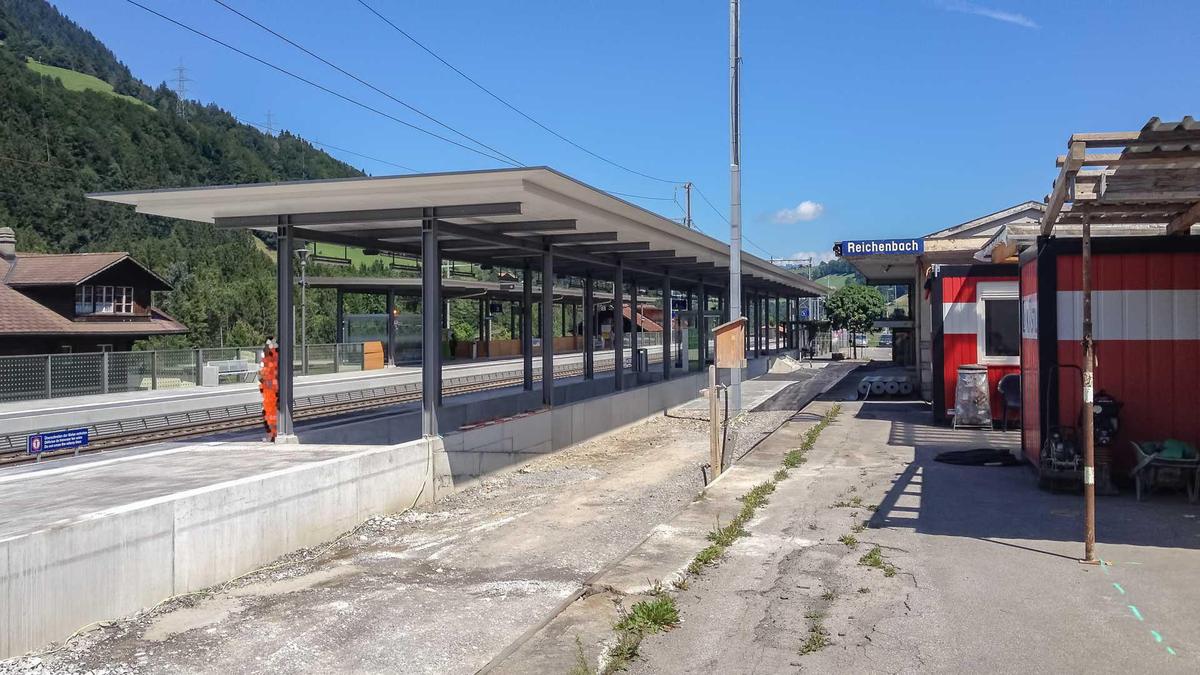
 is the valley mouth where the road splits for Kandersteg or the Kiental. It is a junction, not a destination in itself.
Reichenbach im Kandertal
Reichenbach im Kandertal is the valley mouth where the road splits for Kandersteg or the Kiental. It is a junction, not a destination in itself.
-
 Switzerland Travel Basics for the Bernese Oberland Trip
Switzerland works differently from what many first-time visitors expect. Here are the transport, trail and accommodation basics you will need for the Bernese Oberland.
Switzerland Travel Basics for the Bernese Oberland Trip
Switzerland works differently from what many first-time visitors expect. Here are the transport, trail and accommodation basics you will need for the Bernese Oberland.