Kandertal or Grindelwald: Silence and Dead Ends Versus the Jungfrau Circus
Grindelwald delivers the Eiger, a lift network and international crowds. The Kandertal delivers silence, dead-end valleys and sparse buses. Here is which valley fits which traveller.
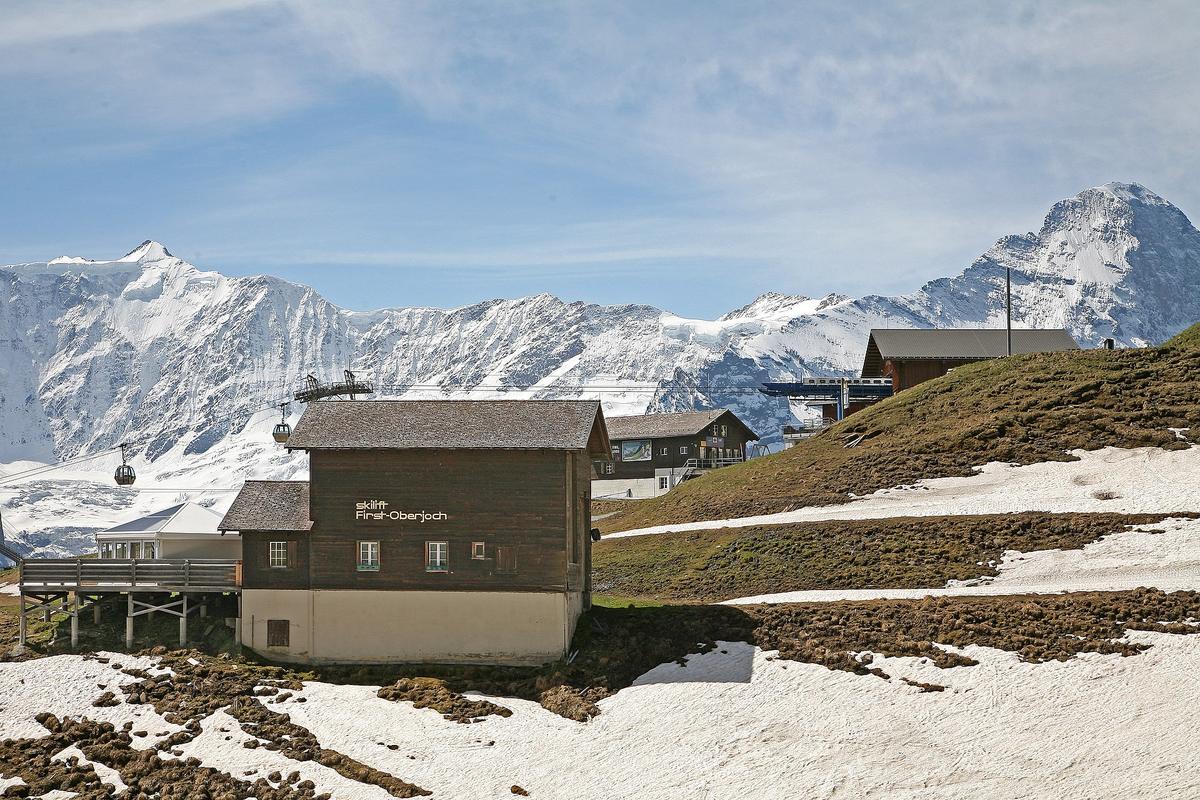
.jpg)
Kandertal or Grindelwald: Silence and Dead Ends Versus the Jungfrau Circus
One valley has 26 lifts linked into a single ski circus and a million overnight visitors a year. The other has two short drag lifts, 180,000 visitors, and bus schedules that leave you stranded if you miss the mid-afternoon departure from a dead-end side valley. Grindelwald is the Jungfrau region’s spectacle valley: the Eiger face, the Jungfraujoch railway, cobbled car-free lanes, and a proper downhill ski area shared with Wengen. The Kandertal is intimate, quiet, and built for people who treat the Alps as something to walk across, not ride over. This is not a ranking. This is a personality match. You choose the valley that fits how you move through mountains, not the one with the bigger Wikipedia page.
| Feature | Kandertal | Grindelwald |
|---|---|---|
| Lift network | 2 drag lifts (Sunnbüel, Allmenalp) | 26 lifts linked with Wengen |
| Downhill piste total | 0 km of linked downhill runs | 102 km of linked pistes |
| Cross-country trails | 60 km (Kandersteg to Kandergrund) | 15 km |
| Highest public transport point | Sunnbüel at 1,934 m | Jungfraujoch railway at 3,454 m |
| Overnight visitors per year | ~180,000 | ~1,000,000 |
| Hotels and inns | ~15 | ~50 |
| Village centre | Quiet main street, railway station, two supermarkets | Car-free, cobbled lanes, boutiques, bars |
| Last bus problem | Buses stop by mid-afternoon in side valleys. No taxi backup. | Frequent trains, no last-mile stranding risk |
| Valley shape | Linear with dead-end side valleys. Each branch costs a full day. | Compact bowl. First, Männlichen, Kleine Scheidegg all reachable from centre. |
The Kandertal is Not a Compact Resort. it is a Collection of Separate Pockets.
Oeschinensee: The Easy Day
The single biggest mistake travellers make is assuming they can see Oeschinensee, Blausee, Gasterntal and the Gemmi in two days. The valley is linear but the side branches are dead ends. Each one consumes a full day. You cannot shortcut between them without returning to the valley floor. Oeschinensee sits above the village at 1,578 m, reached by a gondola that runs mid-May to late October. A same-day return costs roughly CHF 30, set by the local tourism office; check their site for the current figure before you travel. From the top station it is a flat gravel walk to the lake. That is the easy day.
Gasterntal: The Raw Glacial Valley
Gasterntal ends at Selden at 1,537 m. Access is by a single-lane road with a controlled timetable. Private cars need a day permit and are banned from 10:00 to 16:00 in peak months. The PostBus runs June to October only. The last bus back can leave as early as mid-afternoon. There is zero phone signal in Gasterntal. No taxi backup. If you miss it, you walk downhill on the road. Do not assume you can check the timetable when you arrive. Download the SBB Mobile app and the offline timetable before you leave Spiez.
Sunnbüel and the Gemmi Crossing
Sunnbüel, at 1,934 m, is the start of the Gemmi crossing. The cable car operates late May to late October. The walk from Sunnbüel to Gemmi Pass takes 2 hours 30 minutes one way. The trail is a historic mule track. The lake at the top, Daubensee, is wind-scoured and bleak. If you plan to continue down to Leukerbad on the Valais side, you face a one-way crossing. Returning the same day requires a bus from Leukerbad via a 2.5-hour loop. That is not a quick shuttle. Budget for it or stay overnight.
Griesalp: The Highest Public Transport Point
Griesalp, at 1,408 m, sits at the end of a road from Kiental that hits a 28% gradient, the steepest PostBus route in Europe. The bus runs year-round from Reichenbach im Kandertal. The walk from Griesalp to the Blüemlisalphütte is 4 hours one way. Again, no phone signal. The hotel at Griesalp accepts cash only. No card terminals above 1,500 m anywhere in the valley.
Who Should Pick Each Valley, and Who Should Walk Away
Choose Grindelwald If
Grindelwald suits first-time Jungfrau visitors, downhill skiers who want 102 km of linked pistes, and people who want a car-free village centre with cobbled lanes, shops, and evening options. The Grindelwald guest card includes free local bus and discounts on First and Jungfraujoch. The train from Spiez takes 55 minutes. The village sits at 1,034 m, lower than Kandersteg, which means less snow cover on the valley floor in early winter and late spring.
Choose the Kandertal If
The Kandertal suits hikers who want high-alpine trails without the Jungfrau crowds. It suits families with young children who need manageable lake walks and cable cars: Blausee is a paid-entry forest lake at 887 m, open 09:00 to 21:00 in summer. The tourism office sets the entry fee; expect a modest charge for adults and a reduced rate for children aged 6 to 15. No booking needed. The walk from Kandersteg to Blausee is one hour flat along the river. It suits serious ski tourers who want spring snow on the Kanderfirn glacier viewpoint. It suits people who specifically want to sleep in a mountain hut above the treeline, accessed from Griesalp or Sunnbüel. And it suits travellers seeking silence rather than a scene. The Kandertal has no nightlife, no luxury shopping, no après-ski beyond a quiet beer brewed in the village.
Mind the Seasonal Closures
The window to visit is narrow. Peak season is July and August, when all cable cars and mountain huts are open and the high trails are snow-free. Late February to early March works for ski touring on spring snow. Avoid mid-April to mid-June, when most cable cars and huts close for the shoulder-season break and high trails are still snow-covered or dangerously soft. Also avoid late October to mid-December, when nothing operates and the valley sits in deep shade. Seasonal closures in the Kandertal are more severe than in Grindelwald, where the Jungfraubahn runs year-round and the village never shuts down.
Worth it if
- Oeschinensee is genuinely uncrowded if you arrive before 09:00 or after 14:00, avoiding the cable car queue that forms in July and August
- 60 km of cross-country ski trails from Kandersteg through Blausee to Kandergrund, far more than Grindelwald's 15 km
- The valley delivers high-alpine terrain without the circus: the Gemmi crossing, the Gasterntal suspension bridge, the Arven forest above Kandersteg
- Costs are lower. Cable car returns run roughly CHF 22 to CHF 30, and the guest card included with overnight stays gives free local bus and discounts on lifts
- Silence is real. Gasterntal has no phone signal. Griesalp has no card terminals. The valley does not try to entertain you
Skip it if
- The last bus from Griesalp or Gasterntal can leave as early as mid-afternoon even in summer, and there is no taxi backup
- No linked downhill ski area. Two drag lifts. That is all
- Each side valley consumes a full day. You cannot combine Oeschinensee, Gasterntal and the Gemmi in two days without cutting something
- April to June and late October to December are effectively dead seasons. Most lifts and huts close. The valley goes quiet in a way that punishes unprepared visitors
- Cash is mandatory at alp huts and the Griesalp hotel. Swisscom has 4G in the village and at Oeschinensee, but Gasterntal and Griesalp have zero signal. Sunrise and Salt are patchy even in the valley
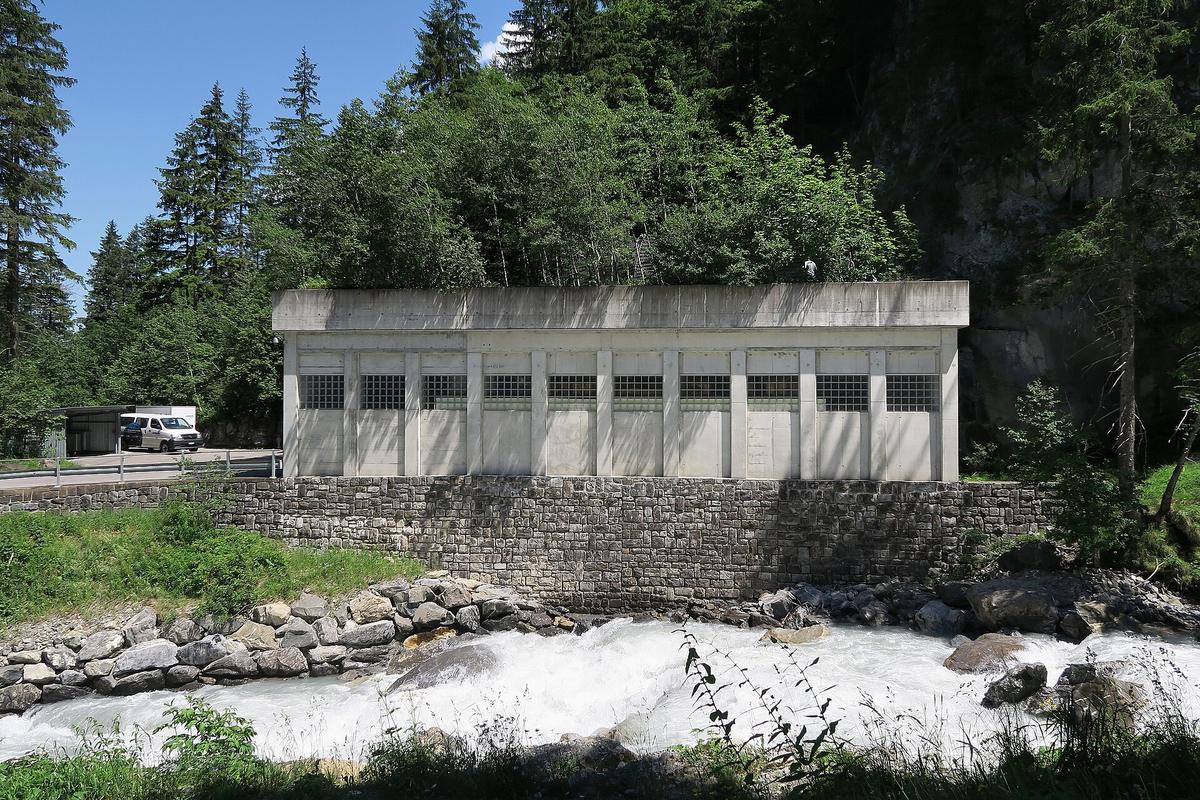
.jpg)
What the Kandertal Does Not Tell You at First Glance
Visitors underestimate how long it takes to walk anywhere. The side valleys are steep. The bus schedules are sparse. The distances sound short on a map. Kandersteg to Oeschinensee is a brief walk from the gondola top station. That is flat and easy. Kandersteg to Gasterntal is a bus ride, then a walk into a dead end with no signal. Kandersteg to Griesalp is a bus ride on a 28% gradient road, then a 4-hour uphill walk to the Blüemlisalphütte. Each objective is a half-day commitment before you factor in weather, rest, and the risk of missing the last bus back.
The Kandertal does not have a taxi backup. Grindelwald does not have that problem. In Grindelwald, if you miss a train you wait for the next one. In the Kandertal, if you miss the mid-afternoon PostBus from Griesalp, you either walk or sleep on the mountain. The valley is beautiful. It is also unforgiving. That is the tradeoff. You trade convenience for quiet. You trade the Jungfrau circus for the Gasterntal suspension bridge, the Arven forest, and the view of the retreating Kanderfirn glacier ice. The question is not which valley is better. The question is which friction you are willing to accept.
Read next
-
 Kandertal Hotels and Mountain Inns Worth Booking
From the timber rooms of the Waldhaus in the Gasterntal to a dormitory bed at the Oeschinensee mountain hut, here are the Kandertal's real hotel options.
Kandertal Hotels and Mountain Inns Worth Booking
From the timber rooms of the Waldhaus in the Gasterntal to a dormitory bed at the Oeschinensee mountain hut, here are the Kandertal's real hotel options.
-
 Where to Stay in the Kandertal Valley for Hiking and Quiet
Compare the three places to sleep in the Kandertal—Kandersteg village, the Kiental farms, and the high hamlet of Griesalp—and find the right base for your hiking trip.
Where to Stay in the Kandertal Valley for Hiking and Quiet
Compare the three places to sleep in the Kandertal—Kandersteg village, the Kiental farms, and the high hamlet of Griesalp—and find the right base for your hiking trip.
-
 Things to Do in the Kandertal Summer Hiking and Winter Ski Touring
What there is to do in the Kandertal, split between summer hiking and winter ski touring, with the dead shoulder seasons clearly marked so you do not arrive to closed lifts.
Things to Do in the Kandertal Summer Hiking and Winter Ski Touring
What there is to do in the Kandertal, split between summer hiking and winter ski touring, with the dead shoulder seasons clearly marked so you do not arrive to closed lifts.
-
 Best Time to Visit the Kandertal and When to Stay Away
The Kandertal has two real seasons—high summer hiking and late-winter ski touring—and two long shoulder closures when the cable cars and huts simply shut.
Best Time to Visit the Kandertal and When to Stay Away
The Kandertal has two real seasons—high summer hiking and late-winter ski touring—and two long shoulder closures when the cable cars and huts simply shut.
-
 Getting Around the Kandertal Without a Car
The Kandertal runs on PostBuses with early last departures and no taxi backup. Learn the Gasterntal road rules, the SBB app, and why offline maps matter.
Getting Around the Kandertal Without a Car
The Kandertal runs on PostBuses with early last departures and no taxi backup. Learn the Gasterntal road rules, the SBB app, and why offline maps matter.
-
 Kandertal Itineraries for Two Days Four Days or a Week
Plan your Kandertal days around the reality that each side valley takes a full day and you cannot shortcut between them—here are itineraries for two, four and seven days.
Kandertal Itineraries for Two Days Four Days or a Week
Plan your Kandertal days around the reality that each side valley takes a full day and you cannot shortcut between them—here are itineraries for two, four and seven days.
-
 Kandersteg
 is the head of the Kandertal and the launch point for Oeschinensee, the Gemmi Pass and the Gasterntal. Here is what you reach from it.
Kandersteg
Kandersteg is the head of the Kandertal and the launch point for Oeschinensee, the Gemmi Pass and the Gasterntal. Here is what you reach from it.
-
 Reichenbach im Kandertal
 is the valley mouth where the road splits for Kandersteg or the Kiental. It is a junction, not a destination in itself.
Reichenbach im Kandertal
Reichenbach im Kandertal is the valley mouth where the road splits for Kandersteg or the Kiental. It is a junction, not a destination in itself.
-
 Kandergrund
 is a string of hamlets along the Kandertal road, anchored by the Blausee and overlooked by the Lötschberg railway ramp climbing to the tunnel.
Kandergrund
Kandergrund is a string of hamlets along the Kandertal road, anchored by the Blausee and overlooked by the Lötschberg railway ramp climbing to the tunnel.